Painted the Nursery? When Baby Can Sleep In It Safely
Repainted the nursery and now nobody settles? How long to air the room out, which paint label to look for, and how to reset a bedtime the redecorating broke.
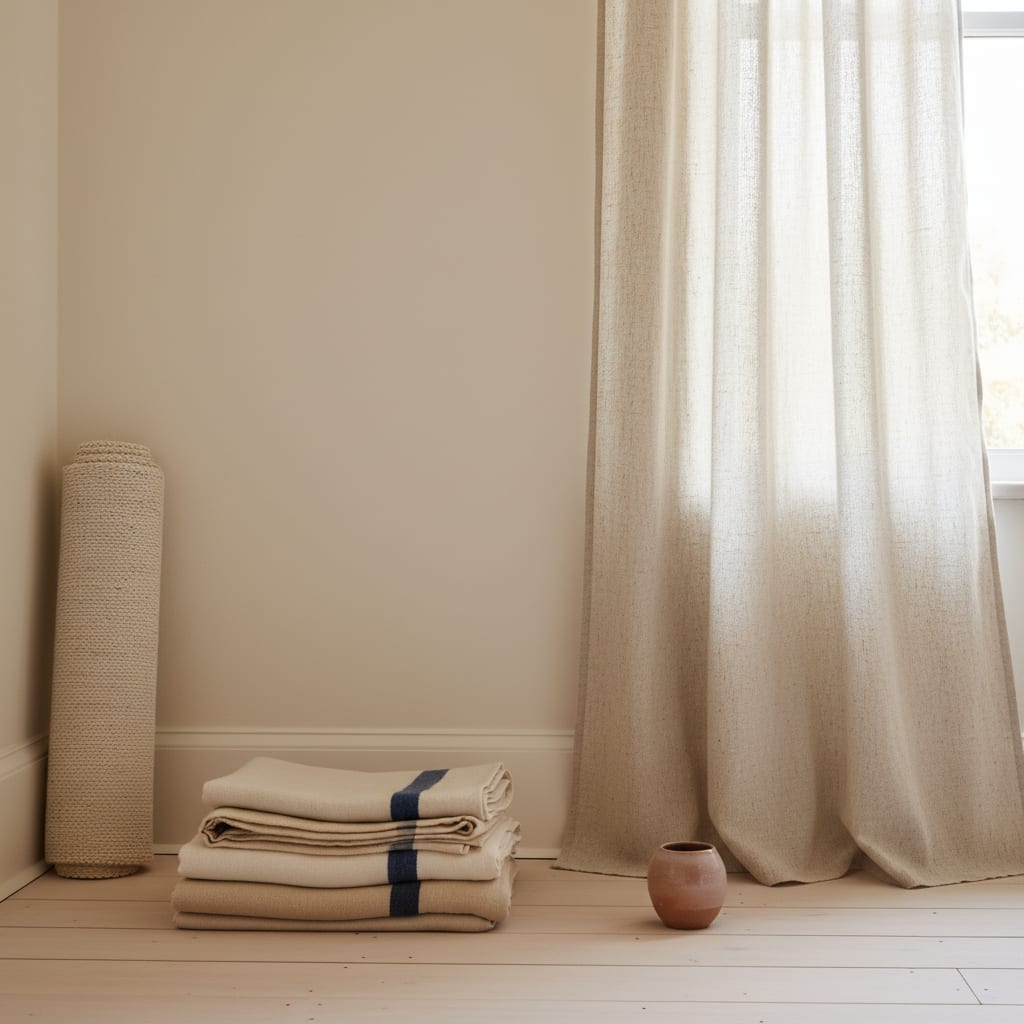
Short answer: air a freshly painted nursery hard for several days before anyone sleeps in it, and choose a low-emitting paint before you choose the color. Paint keeps releasing gases after the smell fades — the EPA’s guidance on volatile organic compounds notes that elevated concentrations can persist in the air long after the activity is finished. Then there is the second problem, which nobody warns you about: even a properly aired room can be one your baby flatly refuses to settle in, because you changed how it looks, smells and sounds in a single weekend.
Why a freshly painted room is two problems at once
The first is air. Paint, primer and caulk all off-gas, and the EPA notes that concentrations of many VOCs run consistently higher indoors than outdoors — up to ten times higher. A closed-up room with a fresh coat on four walls is the concentrated version of that.
The second is familiarity. A baby who slept fine in there last week had a particular light bounce off a particular wall color, a particular smell, and — if you moved furniture to paint — a particular view from the crib. Repainting changes all three at once. To an eight-month-old, you did not freshen up the nursery; you moved them somewhere new.
How long to wait before the baby sleeps in there
There is no official number, and anyone quoting one confidently is guessing: the EPA is explicit that no federally enforceable standards have been set for VOCs in non-industrial settings. What you can control is ventilation, and that is what decides the answer.
Paint with the windows open and keep them open. Not cracked — open, both sides of the house if you can, for the whole job and days afterward.
Give it a few nights minimum. Two or three days of genuine cross-ventilation, more if weather forced the windows shut, more again for oil-based paint, primer or floor finish.
Use your nose as a floor, not a ceiling. Still smelling paint means not ready. No smell does not mean ready — it means you have run out of information and should keep airing.
Sleep in there yourself if you are unsure. A night on the nursery floor tells you more than any blog post.
Temperature matters too: the EPA notes high temperature and humidity can increase concentrations of some pollutants. Air in the warm part of the day and every hour does more.
Pick the paint before you pick the color
Ignore front-of-can marketing and look for a third-party mark. UL’s GREENGUARD Gold certification sets lower emission limits specifically for products used in nurseries, schools and healthcare settings, and certified products must also meet the California Department of Public Health’s chamber-testing method. A far better filter than the words “low VOC” printed by the manufacturer.
Two things worth knowing. “Zero VOC” usually describes the base, not the tint — colorant added at the counter can carry VOCs of its own, so a deep saturated shade is not the product on the shelf. And water-based beats oil-based in a bedroom; trim paint and floor finishes are the strong-smelling part of most jobs, and the part people forget to count.
For a worked example, price out a premium waterborne line like Benjamin Moore’s Aura — then check the can itself for the mark.
Air it out properly: the fan faces outward
The American Lung Association’s advice on VOCs is to open windows and add a fan to pull the indoor air outside while you use products containing them. That word — outside — is what everyone gets backwards.
Put a box fan in the nursery window facing out, and open a window in another room. You now have a one-way current: fresh air in at the far end of the house, paint-laden air out of the nursery. A fan pointed inward stirs the same air around a sealed box. Any plain, powerful fan does it — a 20-inch three-speed box fan sits in a standard sash window and costs less than a gallon of the good paint.
An air purifier is a supporting act. A unit pairing a HEPA filter with an activated-carbon layer — the Coway Airmega AP-1512HH is the one most people land on — helps with odors and particles and earns its keep once the baby is back in the room. It is not a substitute for an open window.
One caveat in January: three days of open windows means a cold room, which is its own sleep problem. Air by day, close up and warm the room before bedtime — layering rules in dressing a baby for cold nights.

The room is ready and the baby still won’t settle
A redecorated room is a changed sleep environment, and babies are conservative about those in a way that has nothing to do with taste. Three things typically changed at once:
The light. Going from a mid-tone wall to a bright white one raises the bounce dramatically, and a room you thought was dark can read considerably brighter at 6 a.m. If the mornings suddenly got early, the wall color is a plausible suspect — the fix is at the window, and my full method is in blocking light at a bedroom window.
The soft furnishings. Curtains come down to paint and rugs get rolled up. Both were absorbing sound, and a room stripped to hard plaster is a louder, echoier place to fall asleep. Getting the textiles back up matters more than the color did.
The layout. If the crib moved even eighteen inches, the view from inside it changed. Put it back exactly where it was — one variable at a time.
Betteroo’s rundown of what a sleep space actually needs is a good checklist for putting the room back together rather than just putting it back. And if the repaint was the front half of a bigger move — nursery finished, baby out of your room at last — that is a separate transition, and Betteroo covers the timing of that move properly.
Room Notes: the five that actually move the needle
- Paint on a Friday. A whole weekend of open windows before anyone decides anything.
- Trim and floor first, walls last. The strong-smelling coatings then get the longest airing.
- Textiles back before the baby goes back. Curtains and rug Saturday, baby Monday — not the other way round.
- Move nothing else that week. No new crib, no room switch, no dropped nap. One change is recoverable; three is a fortnight of nights.
- Give it four nights. The first two in a changed room are not data.
What is not worth doing
A bowl of onions, coffee grounds or charcoal in a saucer. These do not ventilate a room. An open window does.
Repainting in a different color because two nights went badly. It is the settling, not the shade.
Waiting three weeks “just to be safe.” After a well-ventilated few days you have banked most of the benefit, and the baby is now in your room three weeks longer than planned.
If those first nights have already cost you, the morning-after triage is in the bad-night reset.
FAQ
How long after painting can a baby sleep in the room?
There is no official figure — the EPA has set no enforceable VOC standards for homes. Practically: several days of real cross-ventilation for a water-based wall paint, longer for oil-based paint, primer or floor finish. No smell is a starting point, not proof.
Is low-VOC paint enough on its own?
It lowers the ceiling; it does not remove the need to ventilate. Look for GREENGUARD Gold rather than the manufacturer’s own wording, and remember the counter tint is not necessarily part of the certified base.
Can I paint the nursery while pregnant?
Ask your own care provider — that is a medical question, not a decorating one. Handing the roller to someone else is the easy version.
My baby settled fine before the repaint. Why now?
You changed the light, the acoustics and possibly the crib’s view in one go. Put the curtains and rug back, return the crib to its exact previous spot, and give it four nights.
What about a small apartment where the rooms all connect?
Harder, because there is nowhere to send the baby that is not downwind. Paint one room at a time, keep the door shut, run the outward fan continuously — the rest of the playbook is in sleeping a baby in a small apartment.
Keep Reading

The New-Mom Gift Guide: What She Actually Wants in 2026
Gifts new moms actually use — no novelty mugs. The Betteroo sleep app that saved us, the robe that isn't hideous, and more picks grouped by budget.
Christmas Gifts for Husband: Ideas He'll Actually Use
Christmas gifts for your husband that get used: wardrobe upgrades he won't buy himself, practical gifts for everyday life, and how to get his size right.
Sunburned Child Can't Sleep? How to Help Them Settle
How to help a sunburned child sleep after a beach day: a cool bath, aloe, what to wear to bed over a burn, the sheets, and when sunburn needs a doctor.