Baby Sleep in a Small Apartment (No Nursery Needed)
How to get a baby sleeping well in a small apartment with no nursery — zoning one room, handling light and sound, and editing the gear down to what earns space.
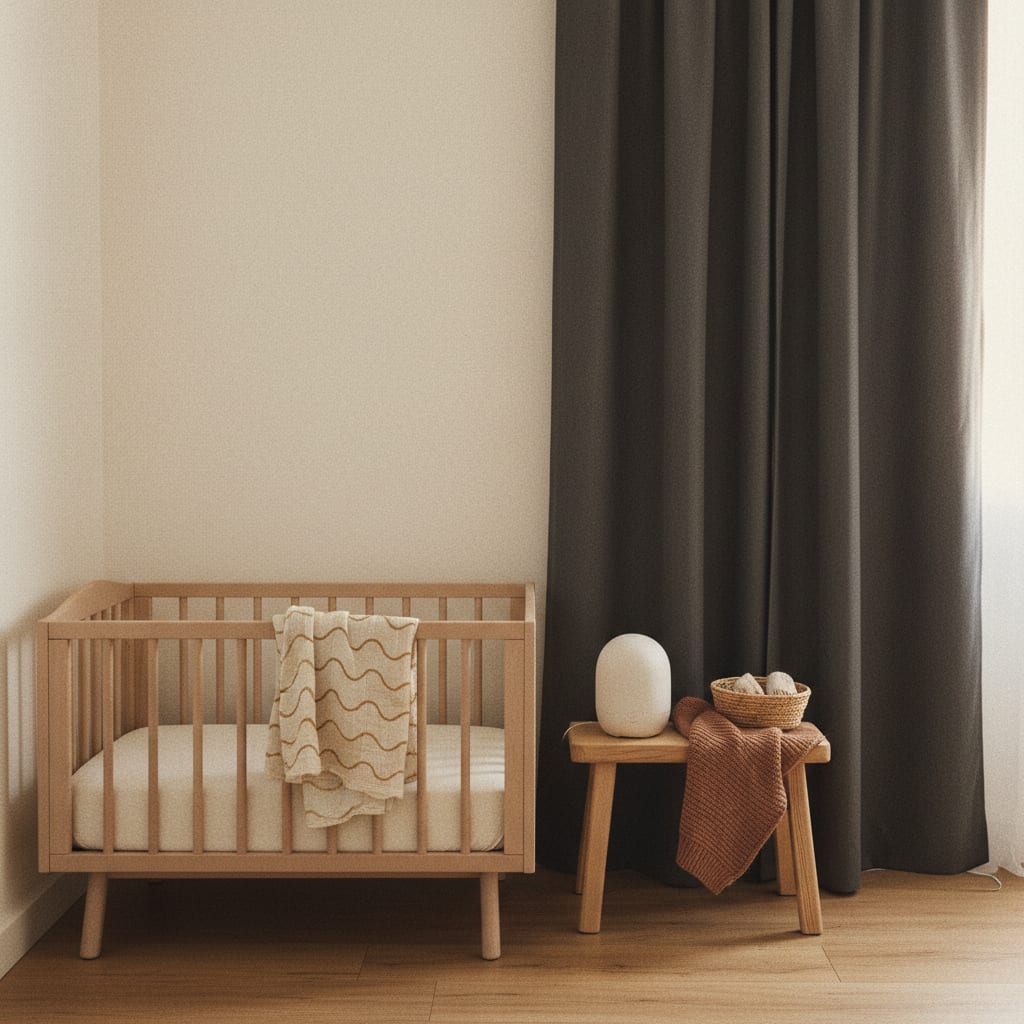
Short answer: a baby does not need a separate room to sleep well — they need a consistent dark, cool, boring corner and a routine that always ends the same way. In a small apartment you’re not building a nursery, you’re building a zone: a defined sleep area inside a room that also does other jobs, with light and sound handled deliberately instead of hoped-at. The people who struggle aren’t struggling because of square footage. They’re struggling because the sleep space keeps changing.
I approach a small apartment the way I approach a wardrobe: the constraint isn’t the problem, the clutter is. Fewer, better things, each one earning its footprint.
Start by deciding where the zone is
Pick the spot and then stop moving it. A corner, an alcove, the far side of a bedroom, the low-traffic end of a studio — the specific location matters much less than the fact that it doesn’t change. Babies build sleep associations out of consistency, and “the crib migrates depending on who’s over” is the fastest way to undo one.
Two practical filters when choosing the corner:
- Away from the door. Every entry and exit is a light-and-noise event. The far wall is worth more than the pretty wall.
- Away from the kitchen wall if you can. Dishwashers, fridges and the 9 p.m. cabinet-slam are structural noise, and they’re louder against a shared wall than in open air.
If you’re weighing whether the separate-room version is genuinely better, Betteroo’s guide on whether babies sleep better in their own room walks through what the evidence actually supports at each age — worth reading before you talk yourself into a bigger lease.
Darkness is the highest-leverage upgrade in a small space
In a room that also holds your bed, your laptop and possibly your dinner, you can’t control ambient activity. You can control light, and light is the lever with the biggest return.
City apartments are the hard case: streetlights, neighbours’ windows, headlights sweeping a ceiling at 2 a.m. A rental usually can’t take a permanent blackout install, so the answer is a removable panel — a suction-cup shade like this Amazon Basics portable blackout curtain sticks to the glass, comes down in seconds, and travels to hotels and grandparents’ houses, which matters when your baby’s sleep depends on the room being the same everywhere. Betteroo’s breakdown of blackout options that actually block light covers the difference between “room darkening” (a marketing phrase) and actual blackout (a measurable thing).
The cheap trick nobody mentions: tape over the LEDs. A router, a TV standby light and a smoke detector between them light a small room more than you’d believe at 3 a.m.
Sound: you want a floor, not silence
Silence is the wrong goal in an apartment — it’s unachievable, and it turns every single noise into a spike. What you want is a consistent low sound floor that flattens them: the upstairs neighbour’s chair, the hallway door, your own kettle.
The canonical piece of equipment is a mechanical white noise machine like the Yogasleep Dohm — it makes its sound with an actual fan rather than a looping audio file, so it never develops that faintly maddening seam every thirty seconds the way cheap loops do. Place it between the sleep zone and the noise source, not beside the baby’s head, at a conversational volume.
The corollary for the adults: a sound floor is what lets you keep living in the room. You can load a dishwasher at 8:30 p.m. in a studio if there’s a steady hum absorbing the edges.
Edit the gear like a capsule
This is where small-space parents lose the most ground, because the baby industry sells one product per problem and a small apartment can’t absorb thirty products. The same rule that runs my postpartum capsule wardrobe applies exactly: buy fewer things, chosen well, each doing more than one job.
What genuinely earns floor space:
- One sleep surface, flat and firm, that fits the corner. A mini crib or small-footprint bassinet beats a full-size crib you shuffle sideways past.
- A blackout panel and a sound machine. The two environmental controls, above.
- A dresser that is also the changing surface. Standalone changing tables are the most-regretted large item in a small apartment.
- One basket, not five. Spare sheet, sleep sack, wipes — one grabbable container.
What doesn’t earn floor space: the swing and the bouncer and the play gym, the wipe warmer, the decorative anything. If it isn’t used daily or doesn’t fold flat, it costs more in room than it gives in help.
Routine does the work that square footage can’t
In a separate nursery, the room change is the signal — you walk in and the baby knows what’s coming. In one room, you build that signal out of a sequence instead of a doorway. Pick four or five steps and run them in the same order every night: dim the lights, bath or wipe-down, sleep sack, feed, one song, down. The order is the message, and within a couple of weeks the third step starts producing yawns before you’ve reached the fifth.
And the part everyone dreads: yes, you keep living in the room. Go quiet, not still — low light, headphones, a sound floor. Babies habituate to ambient household noise far faster than to sudden changes, so a normal evening at low volume is genuinely fine.

Naps are the harder half
Nighttime in a shared room is manageable because everyone’s asleep. Daytime is the real test, because the apartment has to function — calls, deliveries, a toddler, lunch. Three things help disproportionately:
- Same zone for naps as for night. Contact naps have their place, but a baby who only ever falls asleep on you will keep needing you there. (If that’s where you are, my guide to ending contact naps gently is the ladder out.)
- A visual divider. A folding screen or open-backed shelf blocks sightlines so a waking baby doesn’t immediately spot you — and marks the zone as separate.
- Batch the loud jobs. Blender, vacuum, video calls — same window, not scattered through the day.
The reframe
A separate nursery is a nice-to-have that got marketed as a prerequisite. What a baby actually needs is dark, cool, safe, consistent and boring — all achievable in one hundred square feet with three purchases and a routine you don’t break. The families I know who cracked small-space sleep didn’t get more room. They got more specific. It’s the same philosophy behind building a capsule wardrobe: fewer things, chosen better, each earning its slot. It works on closets. It works on corners.
FAQ
Can a baby sleep in the same room as parents?
Yes, and health guidance broadly encourages room-sharing for the early months, on a separate flat, firm sleep surface rather than in an adult bed. What matters is the surface and the consistency, not the wall between you.
How do you make a nursery zone in a studio apartment?
Pick one fixed corner away from the door and the kitchen wall, add a blackout panel on the nearest window and a white noise machine between the zone and the noise, use a visual divider to block sightlines, and keep the sleep surface in that same spot permanently.
Will a baby learn to sleep through apartment noise?
Largely, yes — babies habituate to consistent ambient noise much better than to sudden isolated sounds. That’s why the goal is a steady sound floor rather than silence: it flattens the spikes that actually wake a sleeping baby.
What do you actually need for baby sleep in a small space?
A firm flat sleep surface that fits your corner, a real blackout solution for the window, a white noise machine, sleep sacks, and one basket of supplies. Almost everything else is optional, and in a small apartment optional means expensive.
Where should the crib go in a one-bedroom apartment?
Furthest from the bedroom door and, ideally, off the wall you share with the kitchen or a neighbour. Prioritize low light traffic and low structural noise over how the corner looks — and once you’ve chosen, don’t move it.
Keep Reading

The New-Mom Gift Guide: What She Actually Wants in 2026
Gifts new moms actually use — no novelty mugs. The Betteroo sleep app that saved us, the robe that isn't hideous, and more picks grouped by budget.

Vuori Review: Is the Mom-Uniform Hype Justified?
An honest Vuori review from a mom of two — what the joggers and leggings feel like after months of wear and washing, what's worth it, and what to skip.
Gifts for Your Best Friend She'll Actually Use
Gifts for your best friend, sorted by what your friendship runs on: long-distance, the new-mom friend, the host, the style twin and the friend since school.