Child Sweating at Night? The Pajama Fabric Guide
Child waking hot with damp hair? Why kids sweat at night, how cotton, bamboo, merino and fleece pajamas each handle it, and the signs that it isn't the fabric.
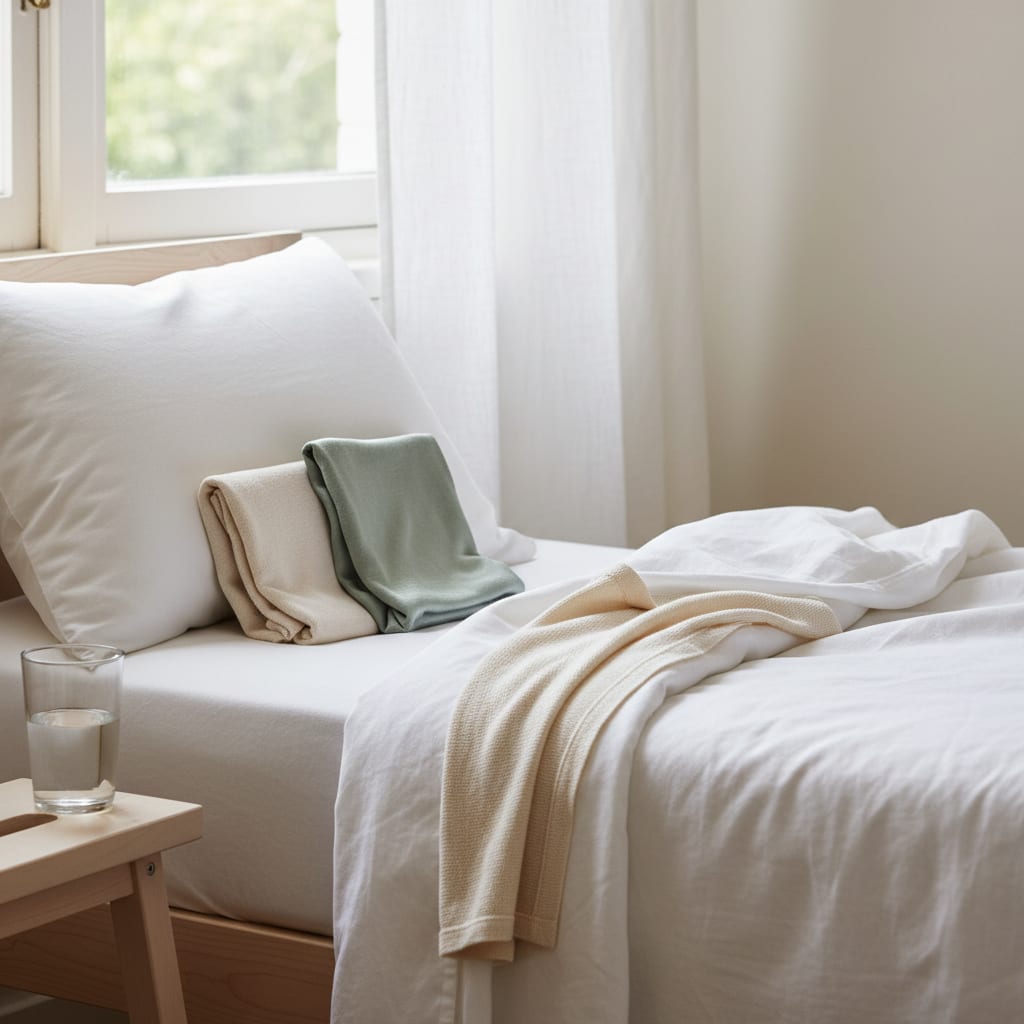
Short answer: a child who wakes hot with damp hair is usually wearing the wrong fabric for the room, not showing you a symptom. Kids sweat most in the deep sleep of the early night, mostly around the head, neck and back. Fleece and heavy polyester trap heat and hold sweat against the skin. Snug-fit cotton, or rayon made from bamboo, lets it move. So start with the pajama and the bedding, then check the room with a thermometer. Drenching sweats in a cool room, or sweats with fever, weight loss or loud snoring, are a doctor question, not a wardrobe one.
Why kids sweat at night in the first place
Betteroo’s pediatrician-reviewed guide describes it plainly: children “spend more of the early night in deep sleep than adults do, and the body sheds heat as it settles into sleep.” Add warm pajamas, a heavy comforter and a pile of stuffed animals, and “many kids simply overheat.” It names the head, neck and back as “the usual sweaty spots.”
A child who is damp an hour after lights-out and dry by morning fits that normal pattern. The fabric can’t stop the heat. It decides whether the sweat dries off or sits against the skin until your child wakes clammy.
The fabrics, ranked for a hot sleeper
| Fabric | What it does with heat | What it does with sweat | Verdict for a hot sleeper |
|---|---|---|---|
| Cotton (jersey or rib-knit) | Breathes well | Absorbs it, then stays damp | Good everyday default |
| Rayon made from bamboo (viscose) | Feels cool and slippery | Absorbs it, drapes off the skin | Best feel for sweaty kids; pricier |
| Merino wool | Regulates across a wide range | Takes up moisture and stays comfortable damp | Great in cold rooms, overkill in warm ones |
| Polyester fleece / microfleece | Traps heat | Doesn’t absorb; sweat sits on the skin | Only for genuinely cold rooms |
Cotton is the workhorse, with one catch: once it’s wet it stays wet, which is why the spare-set rule below matters for a child who soaks through.
Fleece is where most sweaty nights start. A fleece sleeper is sold as the cozy winter pajama and then worn all winter in a heated house. If your child wakes damp in fleece, change the fabric first.
What “bamboo” on the label actually means
Bamboo pajamas are popular with parents of hot sleepers, and the fabric does feel different: cool to the touch, with a drape that falls away from the body. Know what you’re buying, though. The Federal Trade Commission says most “bamboo” textiles “really are rayon”, and that “there’s no trace of the original plant in the finished rayon product.” The honest label is “rayon made from bamboo” or “viscose from bamboo.” The FTC also warns against claims that such fibers keep the plant’s “natural antimicrobial properties.”
So buy bamboo for the feel, not for odor or bacteria claims. A snug-fit set like Little Sleepies’ two-piece in viscose from bamboo is the worked example. The brand’s own FAQ (loaded 2026-09-27) says it uses no flame retardants and is compliant with CPSC regulations. That leaves the close fit as the safety feature, so buy the true size.
Fit: why “just let them sleep in a loose tee” isn’t the fix
The obvious move for a hot child is an oversized cotton t-shirt, and it’s the one to avoid. The Consumer Product Safety Commission says “garments sold as children’s sleepwear for sizes larger than nine months and up to size 14 must be either flame-resistant or snug-fitting,” and it names loose cotton t-shirts and oversized clothes as easy to ignite.
So choose a lighter fabric in a snug cut, not a looser one: a snug short-sleeve top and shorts is the warm-house version of the same safe garment. The fit details (waistband, cuffs, seams) are in what to do when a toddler refuses pajamas, because a sweaty night and a refused pajama are often the same problem.
Babies: sweating is a signal to take something off
Under one, sweating is a safe-sleep issue too. The NHS is direct: “Overheating can increase the risk of SIDS,” and babies can overheat “because of too much bedding or clothing, or because the room is too hot.” Its instruction is to feel the chest or back of the neck and “remove 1 or more layers of clothing or bedding if your baby skin is hot or sweating.”
The AAP’s HealthyChildren site agrees: “Your baby only needs one more layer than you would wear in the same environment,” and the signs to check for are “sweating, a hot chest or flushed skin.” The Lullaby Trust puts the target room at 16-20°C (about 61-68°F).
For a sweaty baby in a sack, the fix is usually a lower TOG or a lighter bodysuit underneath; the sleep sack TOG guide has the numbers by room temperature.
Measure the room before you blame the pajamas
The Lullaby Trust’s point holds at any age: “It can be difficult to guess temperature.” A digital thermometer that records highs and lows, like the TempPro (formerly ThermoPro) TP50, left beside the bed for three nights tells you what the room actually does after you close the door.
If the room is warm, dress for it. If it’s cool and your child still wakes soaked, you’ve ruled out the easy answer. For the cold-room side, dressing baby for cold nights covers which fibers earn their place when the heating drops.
The hot-sleeper capsule
- Three snug-fit everyday sets in cotton or bamboo rayon, short-sleeved if the room runs warm.
- One spare set folded by the bed, plus a small towel, so a 2 a.m. change is quick.
- Lighter bedding. For children past the safe-sleep age, a thin cotton blanket they can kick off beats a heavy comforter, and one or two stuffed animals beat a heap.
When it isn’t the pajamas
The NHS separates ordinary sweating from true night sweats. It’s normal to sweat “if the room or your bedding is making you too hot,” while night sweats are when night clothes and bedding are “soaking wet, even though where you’re sleeping is cool.”
Betteroo’s guide lists what to watch for alongside the sweating: fever that lasts or keeps coming back, unexplained weight loss, swollen glands that stay swollen, a cough lasting weeks, and loud snoring with pauses in breathing. For a baby, it adds sweating during feeds, fast breathing or poor weight gain. It also suggests a one- to two-week diary of timing, room temperature and what your child wore before any appointment. For the full list of causes, Betteroo’s rundown of why children sweat at night and when to call the doctor is the one I’d read.

FAQ
Is it normal for a child to sweat at night?
Yes, especially in the first hours of sleep. Damp hair at the neck with dry pajamas by morning is the ordinary pattern. Check the room and the fabric first.
What are the best pajamas for a child who sweats at night?
Snug-fit sets in cotton or rayon made from bamboo, in a weight that suits the room. Avoid fleece and heavy polyester unless the room is genuinely cold, since they trap heat and hold sweat against the skin.
Can my child sleep in a loose t-shirt if they get hot?
It’s discouraged. US sleepwear above nine months and up to size 14 must be flame-resistant or snug-fitting, and a loose cotton tee is neither.
When should I worry about my child’s night sweats?
When they soak the bedding in a cool room, or come with fever, weight loss, swollen glands, a lasting cough or snoring with pauses in breathing. Then talk to your pediatrician.
Keep Reading
The New-Mom Gift Guide: What She Actually Wants in 2026
Gifts new moms actually use — no novelty mugs. The Betteroo sleep app that saved us, the robe that isn't hideous, and more picks grouped by budget.
Best Winter Coats for Women Who Do the School Run
The best winter coats and winter jackets for women, picked by job: slushy school runs, real cold, mild-and-wet winters and dinner out, plus what to check first.
What Colors Go With Sage Green: 10 Outfit Combos
The colors that genuinely work with sage green, ten outfits to copy, the shoes and metals to reach for, and the one pairing that makes sage read like scrubs.