Toddler Refuses Pajamas? What to Put Them in Instead
A toddler who refuses pajamas is usually refusing a fabric, a temperature or a lack of choice. How to tell which one it is, and what to swap in tonight.
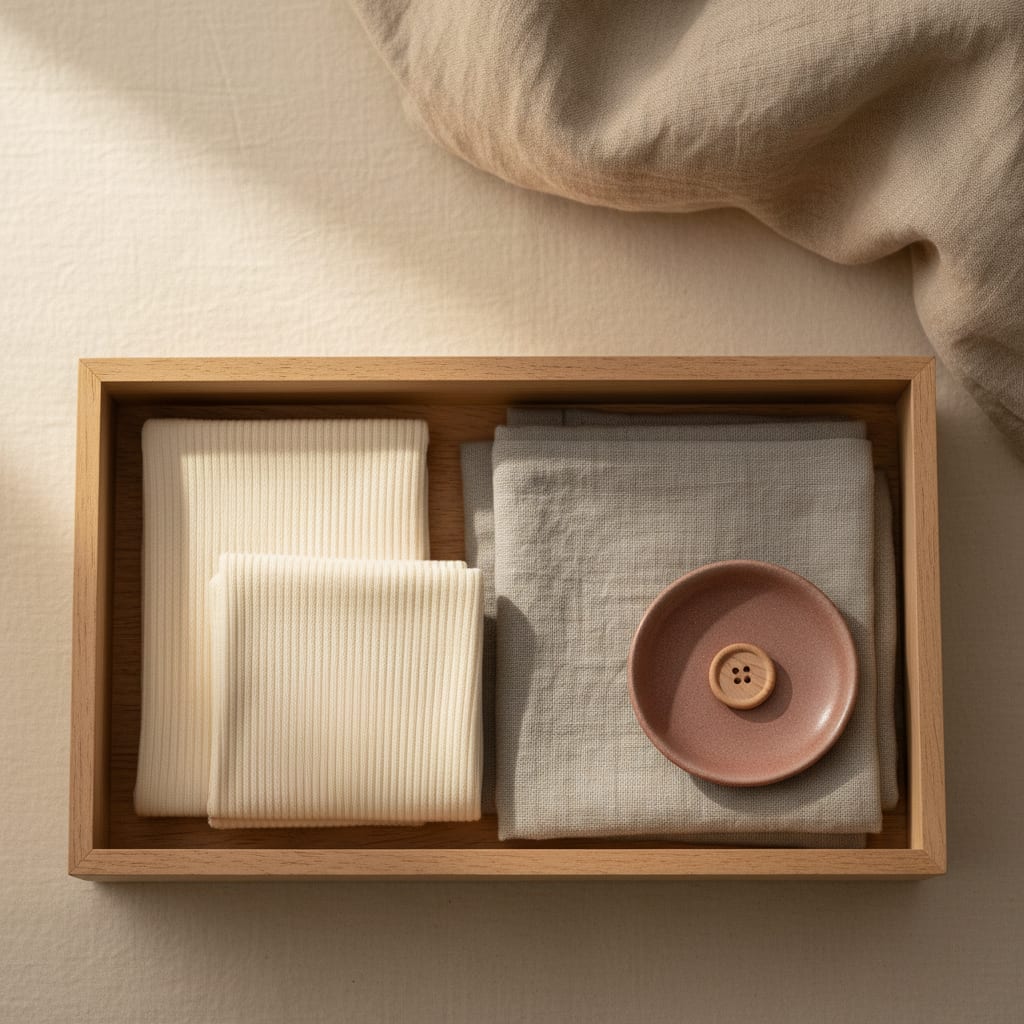
Short answer: a child who has started refusing pajamas is almost never refusing sleep — they are refusing a garment. It is usually one of a few things: the fabric feels wrong on their skin, the room is warmer than the pajamas were built for, or bedtime has become the one part of the day where they get no say. All of them are fixable from the wardrobe side rather than the discipline side: change the garment, offer two acceptable versions of it, and check the room temperature before you check your parenting.
What “won’t wear pajamas” usually means
Four causes cover nearly every case, and each needs a different fix.
It feels wrong. Ankle cuffs that grip, a waistband on a full belly, a printed chest panel gone stiff after ten washes, a seam across the toes of a footed sleeper. Children are not being dramatic about this — they have no language for it, so what comes out is “I don’t want pajamas.”
They are too hot. Fleece sleepers are sold year-round and worn in normally heated houses. A child who fights the pajamas, then sleeps fine once they are down to a t-shirt, is telling you about thermal comfort, not defiance.
It is the only lever they have. Around two and a half, “no” becomes a tool. Bedtime is a long sequence of things done to a child and pajamas are the first item in it, so refusing them is cheap and reliably produces twenty minutes of parental attention.
They are refusing bedtime by proxy. Pajamas are the signal that the day is ending, so a child unwilling to stop playing fights the object that means stopping. This looks identical to the control problem and is fixed differently — you move the pajamas away from the end of the day.
Before you swap anything, one safety rule
Worth knowing before you improvise, because the obvious hack — “fine, sleep in a big t-shirt” — is the one option that is discouraged.
The Consumer Product Safety Commission states that “garments sold as children’s sleepwear for sizes larger than nine months and up to size 14 must be either flame-resistant or snug-fitting”. The same warning names the improvisation directly: loose-fitting t-shirts and oversized cotton clothes “can catch fire easily and are associated with 200 to 300 emergency room-treated burn injuries to children annually.”
Snug-fit cotton sets are not flame-resistant and are not meant to be — the close fit is the safety mechanism, which is why they carry a hangtag with the CPSC’s exact required wording: “For child’s safety, garment should fit snugly. This garment is not flame resistant. Loose-fitting garment is more likely to catch fire.”
So anything sold as sleepwear has made this decision for you; the day-clothes drawer has not. The swaps below stay inside the sleepwear aisle — changing fabric and fit, not category.
Fabric first: the swaps that end most of these fights
Start here: it is the cheapest test and it works on the two causes that are not about willpower.
Go two-piece, and go rib-knit. A soft cotton tee and pant is the lowest-friction thing a small person can wear to bed — no foot seams, no front zip, no single garment to be trapped inside. A Burt’s Bees Baby two-piece organic cotton set is the worked example: snug by design, ribbed rather than elasticated cuffs, thin enough that a normally heated room does not turn it into a problem.
Buy the boring multipack, not one special pair. Refusal gets much worse when the one acceptable set is in the wash. A snug-fit cotton multipack like Simple Joys by Carter’s solves that — same cut, same feel, several of them.
Fit Notes: the waistband and the cuff decide whether a set gets worn. You want a flat, wide, soft-covered waistband sitting below the navel, and a cuff that stretches wide enough to clear a heel without gripping afterwards. Turn the pants inside out before buying the second pair — a hard ridge along the inseam is the pair that lives at the bottom of the drawer forever.
Stop buying, for this child: indoor fleece footed sleepers outside a genuinely cold room, tops with a large rubbery printed panel, and anything hooded. Hoods bunch under the neck and produce a complaint that sounds like a personality problem.
When it is the room, not the pajamas
If your child fights the pajamas, then sleeps sweaty at the hairline or wakes at 2 a.m. having removed everything, you have a temperature problem wearing a wardrobe costume.
Most guidance for children’s rooms lands in the high 60s to low 70s Fahrenheit, and the mismatch matters more than the number: fleece in a warm room is uncomfortable in a way a two-year-old cannot articulate. The fibre logic is the one I use for adult layering — cotton and merino move moisture, fleece and heavy polyester hold heat — and the full weight-versus-room version is in dressing baby for cold nights, with the sack numbers in the sleep sack TOG guide. Betteroo’s guide to what to dress a child in for sleep covers the same decision from the sleep side.
The cheap diagnostic: leave a thermometer in the room for three nights and change nothing else. In a small upstairs bedroom with the door shut, the number is usually higher than you assumed.
The control fix: two options, decided early
If fabric and room are both fine, you are left with the autonomy version, which responds to structure rather than persuasion.
Move pajamas before dinner. The single change that fixes the most cases, and it costs nothing. Pajamas at 5:30 are just clothes; pajamas at 7:10 are the end of the world. It also decouples the garment from the separation the child is actually resisting.
Offer exactly two. Not the drawer — two sets you are happy with, held up one in each hand. Three options is a menu; two is a decision and takes four seconds.
Let the choice be real. If they pick the set you were hoping they wouldn’t, it goes on. A choice overruled once stops working permanently.
Name the deal out loud. “Pajamas before dinner, and you choose which ones.” Small children accept rigid rules as long as the rule is stable and they own a piece of it.
If the refusal arrived alongside broader pushback — stalling, extra requests, sudden night wakings — the garment is the least of it, and the 2-to-5-year sleep regression is the pattern to read first. If bedtime itself has drifted later with the season, that is a different mechanism, unpicked in why bedtime slides when it gets dark at four.
Build a three-piece sleepwear capsule
Pajama drawers cause fights for the same reason overstuffed closets do: too many options, most of them wrong, none findable at the moment you need one. The capsule logic I use for my own wardrobe transfers almost unchanged. Three slots, and nothing else lives in the drawer:
- Two or three identical everyday sets. Snug-fit cotton two-pieces, same cut and weight, different colours only. This covers roughly nine nights in ten.
- One warm set. Heavier weight, or a sack over the everyday set, for a house that drops overnight. Stored separately so it is not grabbed in August.
- One wildcard. The dinosaur set, the sparkly one, the gift. Its job is to be the second option in your two-option choice.
Everything else — the itchy one, the gift that runs small, the fleece sleeper from a colder house — leaves the drawer.
FAQ
Is it OK for a toddler to sleep in day clothes?
Sleepwear above size nine months is required to be flame-resistant or snug-fitting, and loose cotton day clothes are neither. If your child will only sleep in soft knits, buy soft knits sold as sleepwear rather than substituting a big t-shirt.
My child strips off the pajamas overnight. What now?
Check the room temperature first — overnight stripping is the classic overheating tell. If the room is genuinely cool, a snug two-piece, or a sack over the top for a younger child, removes the easy exit without a fight.
Do snug-fit cotton pajamas need to be flame-resistant?
No, and they are not. The close fit is the safety mechanism, which is why every snug-fit set carries the required hangtag stating that the garment is not flame resistant and should fit snugly. Buying a size up “so it lasts” defeats the design.
Keep Reading
The New-Mom Gift Guide: What She Actually Wants in 2026
Gifts new moms actually use — no novelty mugs. The Betteroo sleep app that saved us, the robe that isn't hideous, and more picks grouped by budget.
Color-Changing Night Light Waking Your Toddler? Here's Why
Color-changing night lights are sold on the feature that wakes children. What light does after lights-out, why a shifting hue pulls a child up, and what to use.
Christmas Gifts for Mom She'll Actually Use
Christmas gifts for mom that get used past January, sorted by who she is to you: your own mother, the mom of your kids, or a mom with a brand-new baby.