Carpet Swapped for Floorboards? Why Your Child Won't Sleep
New floorboards and suddenly bedtime falls apart? Why a room without carpet sounds, feels and smells different at night, and the rug-and-textile fixes.
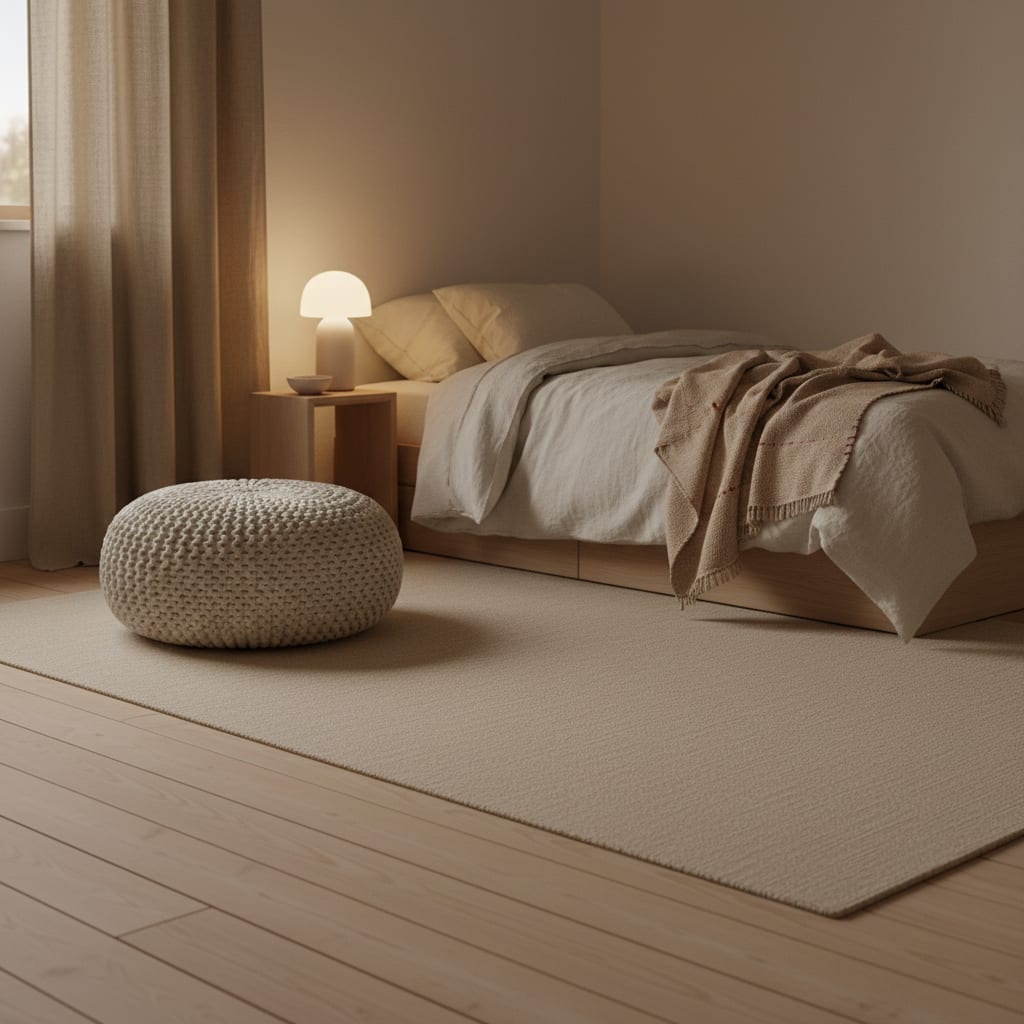
Short answer: when a bedroom loses its carpet, three things change at once — the room gets louder, the floor gets colder, and it stops looking and sounding like the room your child learned to fall asleep in. None of that is a sleep problem in itself, so do not treat it as one. Put soft surfaces back (a large rug on a grippy pad, heavier curtains), quiet the furniture, add a steady sound, and keep the bedtime routine exactly as it was. Then give the room time to stop being new.
Which is good news, because nearly every fix here is a fabric decision.
What actually changed when the carpet came up
Carpet does quiet work you only notice once it is gone.
It absorbed sound. A carpeted room swallows footsteps, voices and the clunk of a door. Bare boards and bare walls bounce all of it back, so the same room now has an edge to it — the landing creaks, a parent walking past is suddenly audible, and a toy dropped at 6 a.m. rings out.
It covered the floor. Bare boards feel cooler underfoot than carpet, and on older suspended floors the gaps between boards can let a draught through. A child who gets out of bed for a wee now steps onto something cold, which is enough to turn a half-asleep trip into a fully awake one.
It made the room familiar. Children are fierce about their bedroom staying exactly as they left it — the same thing that drives a child who will only sleep with the closet door shut. A new floor changes the colour of the room, the way light bounces off it and how every sound in it lands. To an adult it is an upgrade. To a four-year-old at lights-out it is a different room.
Put the soft back first
This is the fix that does the most, and it is the one that makes the room look better too.
One big rug, not a small one. A rug that only sits beside the bed looks like an island and does little for the echo. Go as large as the room allows — ideally under the front two-thirds of the bed and out into the room where your child actually plays. Flat-woven wool or a dense cotton weave is the sweet spot for a child’s room: it softens sound, takes a spill and does not shed like a deep shag.
Always a pad underneath. On bare boards a rug will slide, and a sliding rug under a sprinting child is a trip waiting to happen. A grippy pad such as the Gorilla Grip rug pad holds it in place, and cut to just inside the rug’s edge it disappears completely. It also adds a thin extra layer between feet and floor.
Curtains that reach the floor. Heavier, lined curtains are the second-biggest sound absorber you can add, and if they hang floor-length they also cut some of the draught along the skirting. If you are already fighting light from outside, the streetlight fix covers the curtain choices and does double duty here.
Soft things at child height. A floor cushion, a basket of soft toys, a fabric-covered chair — each takes a little more bounce out of the room.
Quiet the furniture
Hard floors turn furniture into percussion. A chair dragged across boards, a toy box lid dropping, a bed frame that shifts every time your child rolls over — all of those were muffled by carpet and now carry.
A pack of felt furniture pads on every leg in the room is a ten-minute job and it removes most of the scraping. Do the bed legs first, then the chair, then anything your child moves around at bedtime. Check the bed frame for a squeak while you are down there; a joint that was silent on carpet can start to click on a hard floor.
Then walk the route from the bedroom door to the bathroom and back in the dark, the way your child does. Note which boards creak. You may not be able to fix them tonight, but you can stop standing on them when you check in.
Add a steady sound
A room that has become more echoey is also a room where every small noise stands out, because there is nothing underneath it. A steady background sound fills that gap so the creak on the landing is no longer the loudest thing in the room.
A fan-based machine like the Yogasleep Dohm is the plain, reliable choice. Placement matters more than the machine — Betteroo’s guide on how loud and how close a sound machine should sit covers the volume and distance, and it is worth reading before you put one right beside the pillow.
Dress for the new floor
This is where the capsule thinking comes in, and it is the cheapest fix of all.
If the floor is colder, the bottom half of your child needs more than it did — not the whole child. Swap to full-length pyjama bottoms if they have been in shorts, and leave a pair of grippy-soled socks or slippers right beside the bed so the trip to the bathroom starts on something warm and non-slip. Bare boards in socks without grips are slippery, so that last part is about safety as much as comfort.
For babies and young toddlers who sleep in a sack, the question is the room temperature, not the floor, and the layering rules in dressing baby for cold nights still apply. Do not add a blanket to make up for the missing carpet.
If the boards were sanded and sealed
Newly laid boards that arrived pre-finished are just flooring. Boards that were sanded, stained or sealed in place are also a smell, and sometimes a strong one. The US EPA notes that “paints, varnishes and wax all contain organic solvents” and its first step for reducing exposure is plain: “Increase ventilation when using products that emit VOCs. Meet or exceed any label precautions.”
So read the finish’s label for its own cure and re-occupancy guidance, air the room well, and do not rush your child back in on the first evening. The same logic applies as for a fresh coat of paint, which I have covered in detail for a newly painted nursery.
Keep everything else identical
With the room changing under them, the rest of bedtime should not change at all. Same order, same songs, same book count, same light. Put the bed, the night light and the favourite shelf back exactly where they were, even if the new floor tempts you to rearrange. You can move furniture in a month, once the new floor has stopped being new.
Let your child help choose the rug, or at least unroll it with you. A room they had a hand in feels like theirs again.
Room Notes
Rug: bigger than you think, flat-woven, always on a pad trimmed an inch inside the edge. Skip deep pile — it holds crumbs and is hard to vacuum around a bed.
FAQ
Why won’t my child sleep since we took the carpet out?
The room is louder, the floor is colder and the whole room looks and sounds different. Children are sensitive to a changed bedroom at lights-out, and every new noise that carpet used to absorb is something to notice. Soften the room and keep the routine identical.
How long does it take a child to adjust to a new bedroom floor?
It varies, and it goes faster once the room is softened and the routine has not changed. If sleep is still poor a few weeks on, look for another cause rather than blaming the floor — and if you want help working out what is going on, a short sleep questionnaire can point you in a direction.
Is a hardwood floor too cold for a child’s bedroom?
Not if the room itself is a comfortable temperature. The floor feels colder underfoot, so a rug by the bed and grippy socks or slippers solve most of it. Dress your child for the room, not the floor.
Can my child sleep in the room right after the floor is varnished?
Follow the finish’s label for curing and re-occupancy, and ventilate well. Freshly applied floor finishes give off solvent fumes, so give the room time and air before bedtime there.
Keep Reading

The New-Mom Gift Guide: What She Actually Wants in 2026
Gifts new moms actually use — no novelty mugs. The Betteroo sleep app that saved us, the robe that isn't hideous, and more picks grouped by budget.
Spanx Dupes: The Best by Garment, Wash-Tested
Spanx dupes garment by garment — the best Spanx dupes for faux-leather leggings, bodysuits, work pants and lounge sets, and the one category worth full price.

The 2026 Gift Guide for Teen Girls (Vetted by an Actual Teen)
Gifts for teen girls, grouped by budget and vetted line-by-line by my fourteen-year-old. What actually lands, what got vetoed, and the receipt rule.