What to Wear for Night Feeds: Warm Nursing Sleepwear
What to wear for winter night feeds: a light cotton nursing base, one warm layer you put on to feed and take off to sleep, warm feet, and a spare set nearby.
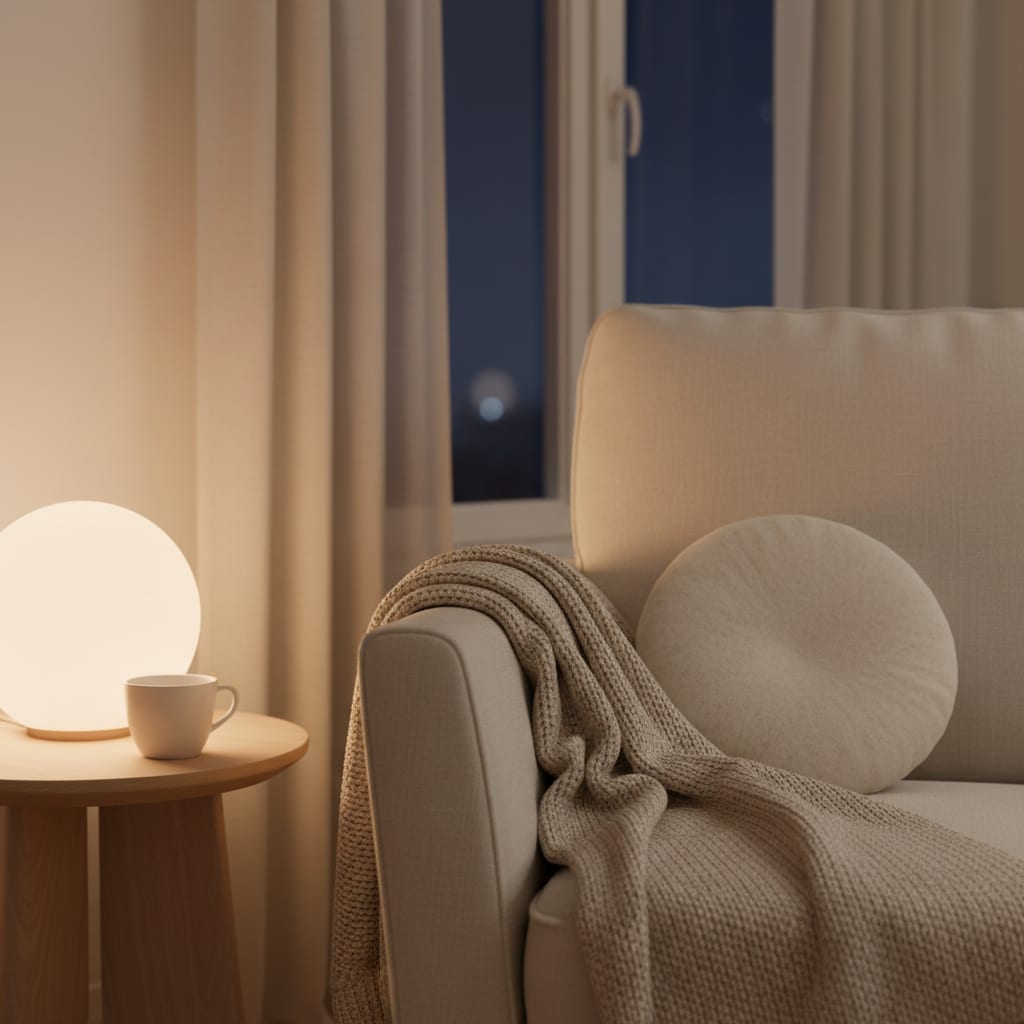
Short answer: for winter night feeds, sleep in something light and dress up for the feed, not the other way round. Your base is a light cotton nursing set or sleep shirt that opens with one hand. On top goes one warm layer you put on at 3 a.m. and take off when you lie down again: a long cardigan or a robe on the chair. Add socks or slippers by the bed and a spare set within reach. Warmth you wear beats warmth you pile on, both for comfort and for safety.
Why winter night feeds are a wardrobe problem
Three things are working against you at 3 a.m. in January.
The room is cool on purpose. A baby’s room (often yours too, if you’re room-sharing) should sit at about 68 to 72°F (20 to 22°C). Comfortable for a baby in a sleep sack; cold for an adult sitting still in a chair for forty minutes.
You may be sweating anyway. Cleveland Clinic calls postpartum night sweats “a normal and natural reaction to changing hormone levels.” It says they tend to be worst in the first two weeks and that you “may have night sweats longer if you’re breastfeeding,” because the milk hormone prolactin keeps estrogen low. So you can wake up damp under the covers and then get cold the second you sit up.
You’re half asleep. Buttons and hooks are harder at 3 a.m. than at 3 p.m. Betteroo’s pediatrician-reviewed guide explains why those broken nights are so draining: broken sleep, the energy cost of making milk, and hormones that change how you sleep. Your clothes should ask nothing of you.
So one heavy pair of fleece pajamas fails both ways: too hot in bed, not enough in the chair.
The 3 a.m. capsule: five pieces
The smallest capsule you’ll ever own. Every piece has one job.
- A light nursing base. Long sleeves, light cotton, with feeding access. For button-front access, a set like the Ekouaer long-sleeve button-down nursing pajamas is the classic. If you’d rather sleep in one piece, a long button-down sleep shirt like the Kindred Bravely Clea works too and has pockets.
- A sleep bra, if you want one. If you leak or want a little support, a wire-free crossover style like the Kindred Bravely French Terry racerback nursing and sleep bra pulls aside instead of unclipping.
- The feed layer. This is the piece that does the winter work. A long open-front cardigan like the Amazon Essentials long cardigan or a waffle robe like the Turquaz waffle knit kimono robe. Open front, so it never gets between you and the baby. Hang it on the feeding chair, not across the room.
- Warm feet. Cold floors are half the misery. Thick socks on the nightstand, or a slipper with a real sole if you walk to the nursery; my slipper guide sorts them by job.
- The spare set. A second base layer folded within reach. Cleveland Clinic’s night-sweat tips include a bath towel under you and a second pillowcase. A ninety-second change beats lying awake damp.
Only the base layer and bra are nursing-specific. The cardigan, robe and slippers outlive the feeding months.
Which nursing opening works in the dark
Nursing tops use one of four openings, and they are not equally easy at 3 a.m.
| Opening | How it works | Night-feed verdict |
|---|---|---|
| Button-front | Unbutton two or three buttons | Pump-friendly, but small buttons are fiddly half-asleep. Look for fewer, larger buttons. |
| Crossover / wrap | Pull one side aside | The fastest one-handed option. Nothing to undo. |
| Pull-down neckline | Stretch the neckline down | Simple, but cheap jersey stretches out fast. |
| Lift-up panel | Lift the outer layer, nurse through the inner one | Keeps your stomach covered, so it’s warmer in a cold room. |
For a cold house, the lift-up panel is the one to look at. The Kindred Bravely CozyKnit nursing pajama set uses one, in a sweater-soft hacci knit with a drawcord waist and pockets, per its listing. If you run hot at night, skip the feed layer with that one.
Fabric: what to sleep in, what to feed in
The rule that runs through this whole site applies here too: several thin layers beat one thick one.
- Light cotton is the base layer. It breathes and washes well. Cleveland Clinic’s first suggestion for night sweats is “light pajamas made of cotton or silk.”
- Modal and bamboo viscose feel soft and cool: good if you sweat, less good if you don’t. Most “bamboo” sleepwear is bamboo viscose, a rayon, so read the fiber line.
- Brushed cotton flannel is warm and still breathes: a fine base if you run cold and don’t sweat.
- Fleece is almost always polyester: warm, but it holds heat and damp against your skin. Keep it for the feed layer, not the sweaty early-weeks bed.
Size for the body you have now, not the one you’re expecting in March. A waistband that sits away from a sore stomach or an incision matters more than any fabric. The postpartum capsule wardrobe has the sizing rules for everything else you wear right now.
Wear your warmth: the safety reason
This is the part that matters most. When you’re cold and exhausted, the tempting move is to pull the duvet or a throw over you and the baby. A layer you’re wearing stays on you. A blanket doesn’t.
The American Academy of Pediatrics’ parent’s guide to safe sleep says that if you bring your baby into your bed to feed, you should put them back in their own sleep space before you go to sleep. If there’s any chance you might fall asleep, “remove pillows, blankets, sheets and other items that could cover your baby’s face, head or neck or lead to overheating.” It also warns that the risk of sleep-related infant death “is up to 67 times higher when infants sleep with someone on a couch, soft armchair or cushion.”
Betteroo’s guide puts it plainly: “If you know you are fading, feeding in bed with the bedding cleared is safer than feeding on a sofa or recliner where you might nod off.”
So the robe isn’t a luxury. It’s what lets you clear the bedding without freezing.
Dress yourself warmer, not the baby
One more trap. At 3 a.m. you feel cold, so the baby must be cold. Not necessarily. The AAP’s rule of thumb is that a baby needs “one more layer than you would wear in the same environment.” That means the room you’d sit in normally, not you fresh out of a warm bed. Dress the baby for the 68 to 72°F room: a base layer and a sleep sack. The details are in dressing baby for cold nights. Then put the extra layer on yourself.
 Dressed for 3 a.m., hoping for 5?
Betteroo builds a gentle, age-specific sleep plan around your baby's real nights, feeds included, so the long stretches come sooner.
Answer a few questions →
FAQ
What should I wear to bed while breastfeeding in winter?
A light cotton nursing set or sleep shirt with easy access, plus a warm layer you put on only for the feed. Sleeping in heavy fleece tends to backfire if you get postpartum night sweats.
Is it safe to feed my baby under a blanket in bed?
Wear your warmth instead. The AAP says to remove pillows, blankets and sheets if there’s any chance you might fall asleep with your baby in your bed, and to put your baby back in their own sleep space before you sleep.
How long do postpartum night sweats last?
Cleveland Clinic says they’re usually worst in the first two weeks and can last longer if you’re breastfeeding. Check with your provider if they last longer than three weeks, or come with fever, chills or pain.
Keep Reading
Work-From-Home Capsule Wardrobe: Zoom-Up, Comfy-Down
A work-from-home capsule wardrobe built on the camera line: 14 pieces that read polished on video, survive school pickup, and never feel like real trousers.
10 Skims Dupes That Survived My Wash Test (2026)
Ten Skims dupes put through months of real machine washes: bodysuits, ribbed lounge, tees, and shapewear compared honestly — and what to buy real.
Aritzia Dupes on Amazon That Actually Look the Part
Six Aritzia pieces worth duping, the Amazon and Quince alternatives that come closest, and the three items where the original is genuinely worth the money.