Short answer: to protect a child’s curls overnight, detangle damp hair with a leave-in, put it in one or two loose braids or twists, and cover it with a satin bonnet that fits without squeezing. From age two, add a satin pillowcase as the backup for the nights the bonnet ends up on the floor. Under 12 months, skip the bonnet entirely: nothing goes on a baby’s head for sleep. To avoid the fight, do hair early in the bedtime routine, keep every style loose enough that nothing hurts, and let your child pick the bonnet.
Why curls need a night plan at all
Curly and coily hair is drier and breaks more easily than other hair types. That’s the American Academy of Dermatology’s starting point in its curly hair care tips, and the last tip on that list is about sleep. The AAD suggests a loose ponytail on top of the head or a loose braid before bed “to preserve your curls and reduce friction against your pillowcase, which can make your hair frizzy and easier to break.”
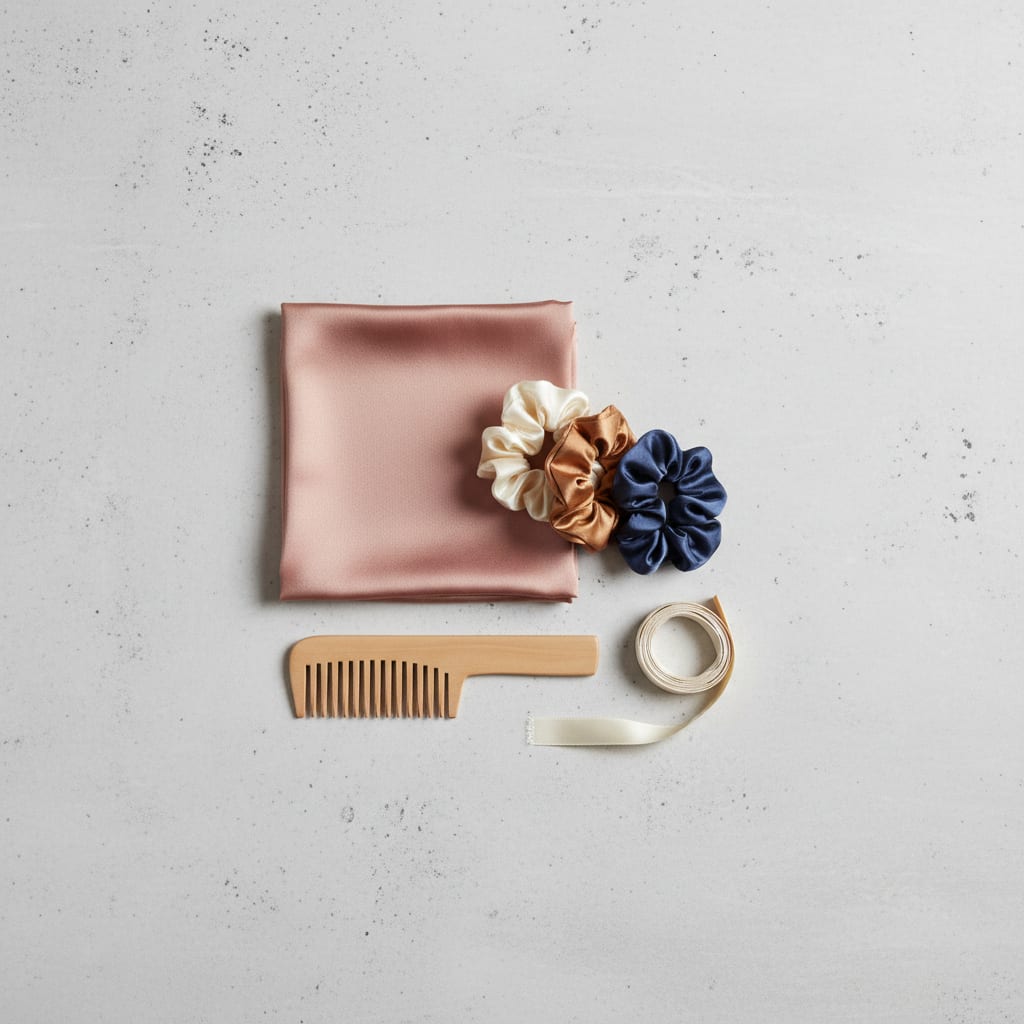
So the morning tangle is a friction problem, and you can dress for friction. Think of it as a three-piece night capsule: a loose style, a soft tie and a smooth cover.
The age line comes first
What’s safe on a child’s head at night depends on how old they are.
| Age | Hair at bedtime | Why |
|---|---|---|
| Under 12 months | Nothing on the head. No bonnet, cap or headband. | The AAP says not to put a hat on a baby indoors, and warns against overheating. |
| 12 months to 2 years | Loose braids or twists, plus a bonnet if they’ll keep it on. | No pillow yet, so there’s no pillowcase to swap. |
| 2 years and up | Loose style, bonnet, and a satin pillowcase as backup. | Old enough for a small pillow. |
The first row isn’t a style opinion. The AAP’s parent’s guide to safe sleep says, “Don’t put a hat on your baby while indoors once you’re home from the hospital,” and says overheating can raise the risk of SIDS. A sleep bonnet is a head covering, so it waits until after the first birthday. More in should a baby sleep in a hat.
The pillow timing comes from Betteroo’s toddler pillow guide, which says not before age 2.
Step one: detangle before bed, never dry
The AAD’s method is to wet the hair, apply a leave-in conditioner, and detangle with your fingers or a wide-toothed comb, working in sections. It also says to avoid brushing curly hair while it’s dry, because that’s when it breaks and frizzes.
In practice:
- Dampen first. Bath night does this for you. On other nights, a spray bottle of water is enough.
- Add slip. A kids’ leave-in such as Cantu Care for Kids Leave-In Conditioner gives the comb something to glide on.
- Go wide. Use fingers first, then a wide-tooth comb like the Paul Mitchell Detangler Comb.
- Work in sections. Finish one before you start the next, so your child can see the end coming.
Step two: a loose style
The style’s only job overnight is to stop the hair rubbing and knotting. It doesn’t need to look good.
- Shorter curls: nothing to braid. Go straight to the cover.
- Medium length: two loose braids or two-strand twists, one each side, so there’s no lump to lie on.
- Long curls: one loose braid, or the AAD’s “pineapple,” a loose ponytail on top of the head.
- Hair already in braids or cornrows: leave the style alone and just cover it.
Loose is a medical rule, not a preference. The AAD’s page on hairstyles that pull says tight braids, cornrows, buns and ponytails can cause a type of hair loss called traction alopecia. It adds that children can get it too, and that the habits behind it “often begin at a young age.” The same page says to loosen braids around the hairline, and to choose thicker braids.
Its test is easy to remember: “If your hairstyle feels painful, the style is too tight.” If your child says “ow” while you braid, redo that section looser.
Use a soft tie. Finish braids with small satin scrunchies, such as these WILLBOND mini satin scrunchies, rather than thin elastics.
Step three: the bonnet (and its backup)
A bonnet keeps the hair off the cotton altogether. The AAD says a head covering “made of silk or satin is gentler on hair than other materials,” and that hair should be pulled back loosely beneath it.
What to look for in a child’s bonnet:
- A child’s size. An adult bonnet slides over a small face. A kids’ one, like the YANIBEST double-layer adjustable satin sleep cap, is cut for a smaller head.
- An adjustable or wide, soft band. It should stay on without leaving a line on the forehead. I’d choose a band over long ribbon ties for a small child.
- Satin on the inside, against the hair.
Fit Notes: the bonnet sits at the hairline, not down over the eyebrows, and you should be able to slide a finger under the band all the way round. The AAD notes that the constant rubbing of a head covering can itself cause hair loss, so if the edges look thinner where the band sits, loosen it.
The backup, from age two. Bonnets come off. A satin pillowcase means the hair still lands on something smooth when that happens. Toddler pillows are small, so buy the case to match, such as these RUDONG M 13x18-inch satin toddler pillowcases. The rest of the bed is covered in our guide to dressing a child’s bed for winter.
How to do all this without a fight
The hair routine usually fails because it hurts, it’s too late, or the child has no say.
- Move hair earlier. Do it straight after the bath, while the hair is damp and your child still has some patience. Hair belongs with pajamas and teeth, not after the last book.
- Take the pain out. Damp hair, leave-in, fingers first, loose braids. Most of the bonnet “fight” is really a detangling fight.
- Hand over two small choices. Which bonnet tonight, and one braid or two.
- Match them. If you sleep in a bonnet too, put yours on at the same time. It’s the same trick that helps when a toddler twirls your hair to fall asleep: covered hair becomes the normal bedtime look.
- Decide the “it fell off” rule in advance. A bonnet that needs fixing is a perfect reason to call you back in. Betteroo’s guide to bedtime stalling recommends building the usual requests into the routine and setting limits ahead of time. For hair, that’s one bonnet check at tuck-in.
And if it comes off at 2 a.m., leave it off. One night of friction costs less than waking a sleeping child.
 Is the hair fight really a bedtime fight?
Betteroo builds an age-specific sleep plan around your child's real patterns, so the whole routine runs shorter and calmer.
Take the quick sleep quiz →
When to loosen up or ask a dermatologist
The AAD says to change a hairstyle straight away if you notice pain from tightly pulled hair, stinging or crusts on the scalp, or “tenting,” where sections of scalp are pulled up like a tent.
It also says to look for broken hairs around the forehead, a receding hairline, or patches of loss where the hair is pulled tight. If you see those on your child, take the style out and ask a dermatologist or your pediatrician. The AAD says traction alopecia can become permanent the longer it goes untreated.
FAQ
At what age can a child wear a bonnet to bed?
After the first birthday. The AAP says not to put a hat on a baby indoors, and a bonnet is a head covering, so skip it under 12 months.
Is a satin pillowcase enough without a bonnet?
Often, yes, once a child is old enough for a pillow (age 2 or older). It won’t hold a style the way a bonnet does, but it does cut friction.
Should I braid my child’s hair for bed?
A loose braid or twists help stop tangles, and the AAD suggests a loose braid or loose high ponytail for sleep. If it hurts, it’s too tight.