Should a Baby Sleep in a Hat? What to Do on Cold Nights
Should a baby sleep in a hat on a cold night? Why the AAP says no hats indoors, when the hat comes off, and how to keep a baby warm through the sleep sack.
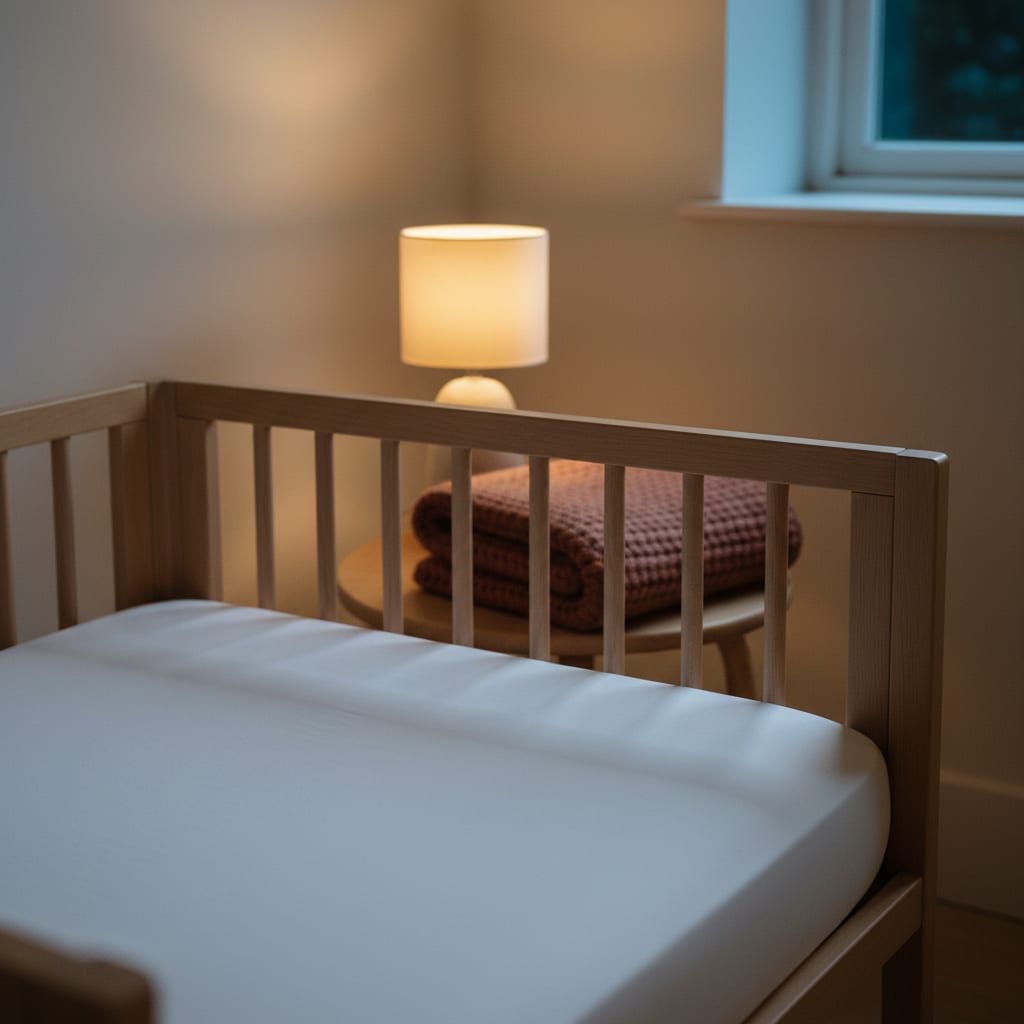
Short answer: no. Once your baby is home from the hospital, the hat comes off indoors, including at bedtime on the coldest night of the year. The American Academy of Pediatrics says plainly: “Don’t put a hat on your baby while indoors once you’re home from the hospital.” Babies release heat through their heads, overheating is linked to a higher risk of SIDS, and a hat blocks that release. On a cold night, add warmth through the sleep sack and the layer under it, and keep the head bare.
I think of it as a closet rule more than a nursery rule. A baby’s hat is outerwear, like your coat, so it lives by the front door, not in the crib.
Why the head stays bare
Three reasons, and they all point the same way.
The head is how babies cool down. The Lullaby Trust explains that “babies maintain their body temperature by releasing heat through their head”, so wearing a hat can mean they get too hot. A hat covers the one exit route left open when the rest of the body is zipped into a sack.
Overheating is a sleep-safety issue, not just a comfort one. The AAP says overheating can increase the risk of SIDS. NIH’s Safe to Sleep campaign puts it the same way: overheated babies are at higher risk for SIDS, and wearing hats indoors can make a baby too hot, “so take off baby’s hat when inside.”
Hats move. A knit hat that sits right at 7 p.m. can slide down by 2 a.m. Safe to Sleep’s advice is to keep a baby’s head and face uncovered during sleep, and a hat that has slipped over the eyes does neither.
“But the hospital put a hat on her”
This is the most common reason parents ask. Newborns often wear a little cap in the hospital, and it feels like the hat is part of the newborn uniform. The AAP’s wording covers it: the no-hat rule starts once you’re home from the hospital. What happens on the ward is a hospital decision made with nurses watching. At home, the cap goes in the outerwear drawer.
If your baby was born early or spent time in the NICU, ask the team before discharge how they want your baby dressed for sleep at home, and follow that.
The hand-off moments: when the hat comes off
Most hats end up on a sleeping baby by accident. The baby falls asleep outside dressed for the cold, then gets carried inside still wearing it. The NHS is direct about this: remove hats and extra clothing as soon as you come indoors or get into a car, bus or train, “even if it means waking your baby.”
Treat these as hat-off points:
- Through the front door. Hat off, before anything else, even mid-nap in the stroller.
- Into the car. The car warms up fast. My car seat dressing guide covers the rest of the winter car outfit, coat included.
- Into the carrier or sling. The NHS adds that the material shouldn’t cover your baby’s head. Your body is warming the baby too, so a carrier often needs less on top than you’d think.
A practical trick: keep the hat in your coat pocket rather than the diaper bag. When your coat comes off at the door, you’ll notice the hat in your hand, and the baby’s head is the next thing you check.
What to do instead on a cold night
Swap the hat for fabric weight. The AAP’s rule of thumb is that a baby needs about one more layer than you’d wear in the same room, and that you can use layers of clothing or a wearable blanket instead of loose bedding.
The working version:
- Keep the nursery at about 68 to 72°F (20 to 22°C). Put a thermometer at crib height, because the room’s coldest point is usually overnight, not at bedtime.
- Choose the base layer by that temperature. A long-sleeve bodysuit in that range, footed pajamas plus a bodysuit if the room runs cooler.
- Choose the sleep sack by TOG. If the room drops below that range overnight, move to a heavier sack, such as the Kyte Baby 2.5 TOG sleep bag, rather than adding a hat or a blanket. The full chart is in my sleep sack TOG guide.
My cold-night layering guide has the room-by-room table and the fabric rundown (cotton, merino, bamboo, fleece). This post only covers the hat, and the hat isn’t part of the answer.
Fit Notes: if a hat is going on for the walk home, choose one that pulls off in a single move: a stretchy knit beanie with no ties. Anything you have to unknot in a dark hallway is a hat that stays on.
How to tell if your baby is warm enough without one
Feel the chest or the back of the neck. Hands and feet run cool on babies and aren’t a reliable guide. The AAP’s signs of overheating are sweating, a hot chest or flushed skin. If you see those, take a layer off rather than changing the whole setup.
A damp head on its own is very common. Betteroo’s guide explains why so much of a baby’s sweat shows up on the head: babies have a lot of sweat glands there, and it’s often the only part of them not covered. That is also why it’s the worst place to add a hat.
 Dressed right and still up at 4 a.m.?
If the room and the layers check out, the next thing to look at is the schedule. Betteroo builds a gentle, age-specific sleep plan around your baby's real day.
Answer a few questions →
FAQ
Should a baby wear a hat to sleep when it’s cold?
No. The AAP says not to put a hat on your baby indoors once you’re home from the hospital, and that includes sleep. Keep the head bare and add warmth with a warmer sleep sack or a heavier base layer.
Why do hospitals put hats on newborns?
Newborns often wear a cap in the hospital, where staff are watching them. The AAP’s no-hat advice starts once you’re home. If your baby was premature or in the NICU, ask the team how to dress your baby for sleep at home.
My baby fell asleep in the stroller with a hat on. Should I take it off?
Yes. The NHS says to remove hats and extra layers as soon as you come indoors, even if it means waking your baby. If your baby is still napping, the nap should continue on a flat, bare sleep surface, not in the stroller.
Can a baby wear a hat in the car seat?
A hat is fine for the cold walk to the car. The NHS advises taking it off once you’re in the car, because cars warm up quickly. Keep the baby’s face uncovered.
What about a toddler who wants to wear a hat to bed?
The AAP’s hat advice is written for babies, but the reason behind it still applies: the head is where a sleeping child sheds heat. If a toddler insists, let them take it to bed, take it off once they’re asleep, and keep them warm with pajamas and a sleep sack instead.
Keep Reading
Vuori Dupes That Actually Feel Like Vuori
Vuori dupes worth buying: the Amazon joggers, leggings and hoodie closest to the real thing, the Vuori pieces that can't be duped, and how to judge a listing.
Dressing Baby for Cold Nights Without Overheating
A cold snap doesn't mean more blankets. How to layer a baby for cold nights: fabric weights, what goes under a sleep sack, and the four things to never add.
Glow-in-the-Dark Stars and Sleep: Calming or Too Much?
Are glow-in-the-dark stars on the ceiling calming or too stimulating for sleep? How the glow works, when it backfires, the safety catch, and how to place them.