Working From Home With a Baby: Naps Around Meetings
How to build a work-from-home day around a baby's naps: where each kind of meeting goes, what to do when a nap fails mid-call, and the 60-second camera reset.
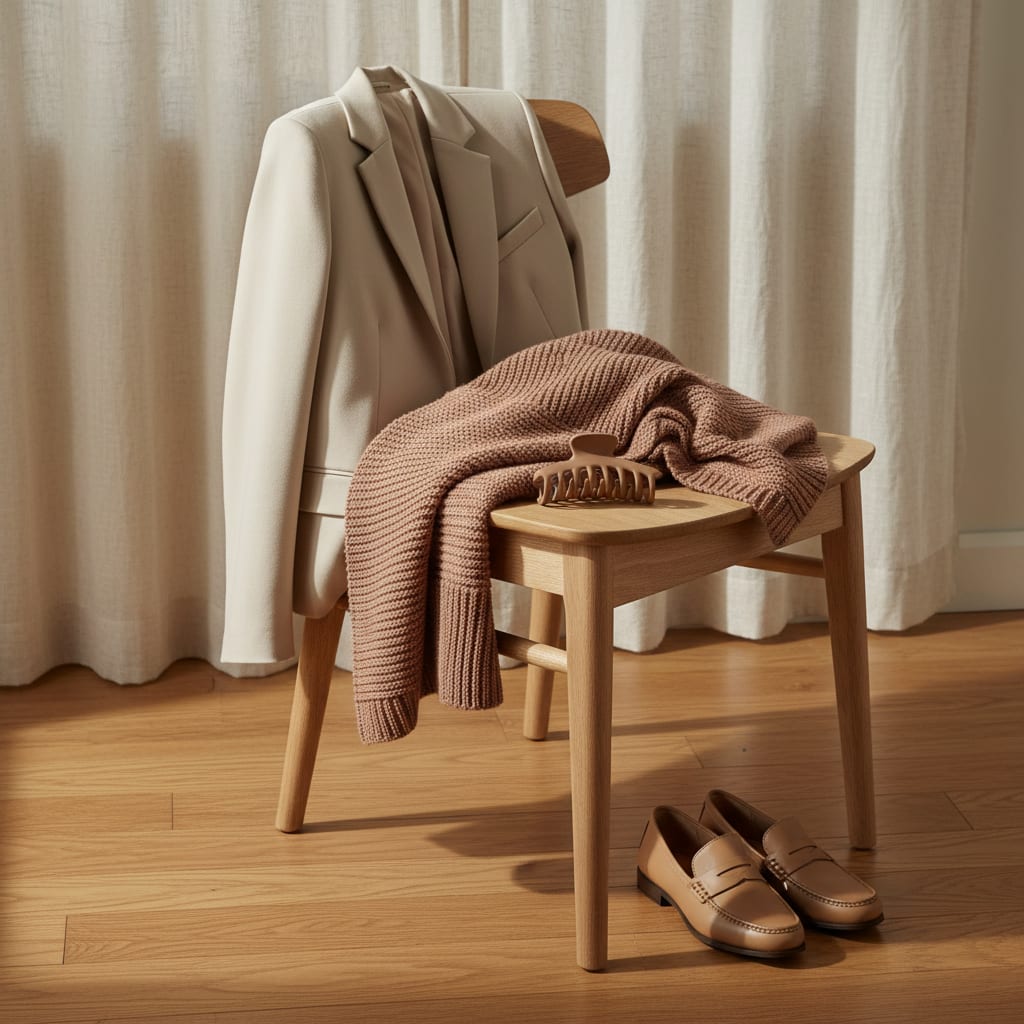
Short answer: stop scheduling around the naps and start scheduling around the one block you can predict — the first nap of the day. That’s where the hardest, camera-on, don’t-interrupt-me work goes. Everything else sorts into what survives a baby in the background and what doesn’t. Then you keep one structured layer within arm’s reach, so a call that lands twenty minutes before it starts doesn’t also cost you a wardrobe decision.
The first nap is the only one worth booking against
Past the newborn stage, the first nap is usually the longest, the most consistent and the one that takes least persuading — pressure has been building since the small hours, the house is quiet, nobody has been to the park yet. It’s the closest thing a work-from-home day has to a fixed appointment.
The afternoon is where it goes soft. That nap is shorter, it collapses on a teething day or after a morning out, and it’s the first to disappear when a transition starts. Planning the week as though both naps are equally bankable is how this arrangement falls apart in month two.
Knowing what’s normal for the age stops you renegotiating the calendar every time a nap runs 25 minutes short. Betteroo’s breakdown of nap length by age is worth having open when you’re deciding whether the schedule has drifted or today was just today.
Sort every meeting into three tiers before you touch the calendar
Tier 1 — camera on, full attention, cannot be interrupted. Client calls, interviews, presenting anything. First nap only. If it won’t fit there, it moves to another day.
Tier 2 — camera on, partial attention. Stand-ups, status check-ins, the meeting where you speak for ninety seconds. These survive the afternoon nap, and on a good day a baby playing on the floor behind you.
Tier 3 — audio only, or not really a meeting. Listening calls, one-to-ones with someone who knows your situation. Take these walking the stroller round the block, which doubles as the nap.
The tiering isn’t the hard part. The honesty is. Most people set this up assuming four or five Tier 1 slots a day. You have one, occasionally two. Build the week from that number and it holds; build it from five and you spend every afternoon apologising.
Protect the nap’s start time, not its length
Meetings rarely wreck a nap by overlapping it. They wreck it by running four minutes over at exactly the moment the nap should have begun. A nap offered late to an already-tired baby takes twice as long to start and ends early — you lose the back half of the block you scheduled the meeting inside.
So make the rule mechanical: the meeting before a nap ends five minutes early, every time. Book it to :25 and :55 rather than :30 and the hour. Highest-return calendar habit in the whole setup, and it costs nothing.
When the nap fails and the meeting doesn’t move
It will happen, so have one prepared version rather than improvising while an invite counts down.
- Camera off, mic muted, and say why in chat in the first thirty seconds. Naming it removes the thing that actually derails you: wondering whether anyone noticed.
- Move to the softest room in the house. Sound bounces off hard floors and bare walls; a bedroom with a rug in it is a quieter mic environment than a kitchen, every time.
- Wear the baby if she’ll tolerate it. A carrier buys twenty minutes of swaying, and standing is fine on a call nobody can see.
- Ask for the recording. Half-listening while bouncing is worse than reading the transcript.
Then treat the rest of the day as a recovery day, not a catch-up day — capped naps, bedtime pulled 20–30 minutes earlier, nothing structural changed. That reset is in how to reset the day after a bad night.
Sound is doing more work here than anything else
What wakes a baby during your 10 a.m. is almost never the volume of your voice. It’s the change — silence, then a voice, then silence. A steady sound floor smooths that out both ways: it masks you from her and her from your microphone.
A mechanical white-noise machine is the version worth owning, because it makes a continuous sound rather than a short clip looping. The Yogasleep Dohm Classic is the canonical one, and the same unit is sold for office privacy as much as for baby sleep — which tells you those are one job, not two. One in her room; in a small space, a second by your desk aimed at the shared wall.
The transition that quietly breaks the whole system
Somewhere in the second year the two-nap day becomes a one-nap day, and every calendar assumption goes with it. The bankable morning block disappears, the single midday nap lands later than the old first nap, and for a few weeks nothing is predictable. Read what the two-to-one nap change looks like before you’re in it, and mark your Tier 1 meetings provisional for a fortnight rather than rebooking them twice.
The other structural risk is a nap that only happens on you — fine on a Sunday, impossible on a workday. The gentle way out is in how to stop contact naps.

The 60-second camera reset
You will get twenty minutes’ notice for something. The point of a work-from-home wardrobe is that those twenty minutes cost you sixty seconds, not fifteen.
One structured layer lives on the chair, not in the closet. A knit blazer does this job — it reads tailored on camera, it doesn’t crease from being sat on, and it goes over whatever you’re already wearing. A soft ponte one like the Amazon Essentials soft ponte blazer is the cheap, correct version; the expensive drapey ones photograph worse, because a webcam only sees shoulders.
Fit Notes: ponte blazers run relaxed through the body and narrow at the upper arm — between sizes and typing all day, take the bigger one. The fabric holds its shape through a night on a chair back, which is the whole reason it works here, but it pills where a laptop edge rubs the forearm; shave it once around six weeks and it stays presentable for a couple of seasons.
Swap the neckline, not the outfit. A crew tee reads as just-woke-up on camera even when it’s spotless; a collar or a V doesn’t. One collared shirt within reach of the desk does more than any amount of changing trousers.
Fix the hair with a decision you can make blind. Claw clip, low bun, done.
The wardrobe underneath this — what goes above the camera line, what stays below it, how few pieces it takes — is in the work-from-home capsule wardrobe, and the ninety-second dressing math is in mom outfit formulas.
What to stop doing
- Stop booking meetings “during naptime” without naming the nap. The first and second naps are not interchangeable slots.
- Stop working through both of them. The parent who never gets a break is the one who quits the arrangement by November.
- Stop changing clothes to leave the house. If pickup needs an outfit change, the wardrobe isn’t working.
FAQ
How do you work from home with a baby who still naps twice?
Give the first nap to your hardest, most attention-heavy work — it’s the longest and most reliable sleep of the day. Use the second for lower-stakes meetings and admin, and assume it will fail sometimes rather than building anything critical on it.
What do I do if my baby wakes during a video call?
Camera off, mic muted, and say so in chat straight away. Move to a carpeted room, pick her up, and ask for the recording rather than half-following. Naming it in one line costs less attention than hiding it for twenty minutes.
Should I tell my team I have a baby at home?
Yes, plainly and once — which meetings you can be fully present for and which you’d rather take audio-only. Vagueness generates the awkward moments; a stated constraint almost never does.
What should I wear if a call could appear at any moment?
Keep one structured layer — a knit blazer or collared shirt — on the back of your chair, and build the rest of the outfit so it already passes at school pickup. Sixty seconds of top-half upgrade beats keeping a whole second outfit in reserve.
Keep Reading

The New-Mom Gift Guide: What She Actually Wants in 2026
Gifts new moms actually use — no novelty mugs. The Betteroo sleep app that saved us, the robe that isn't hideous, and more picks grouped by budget.
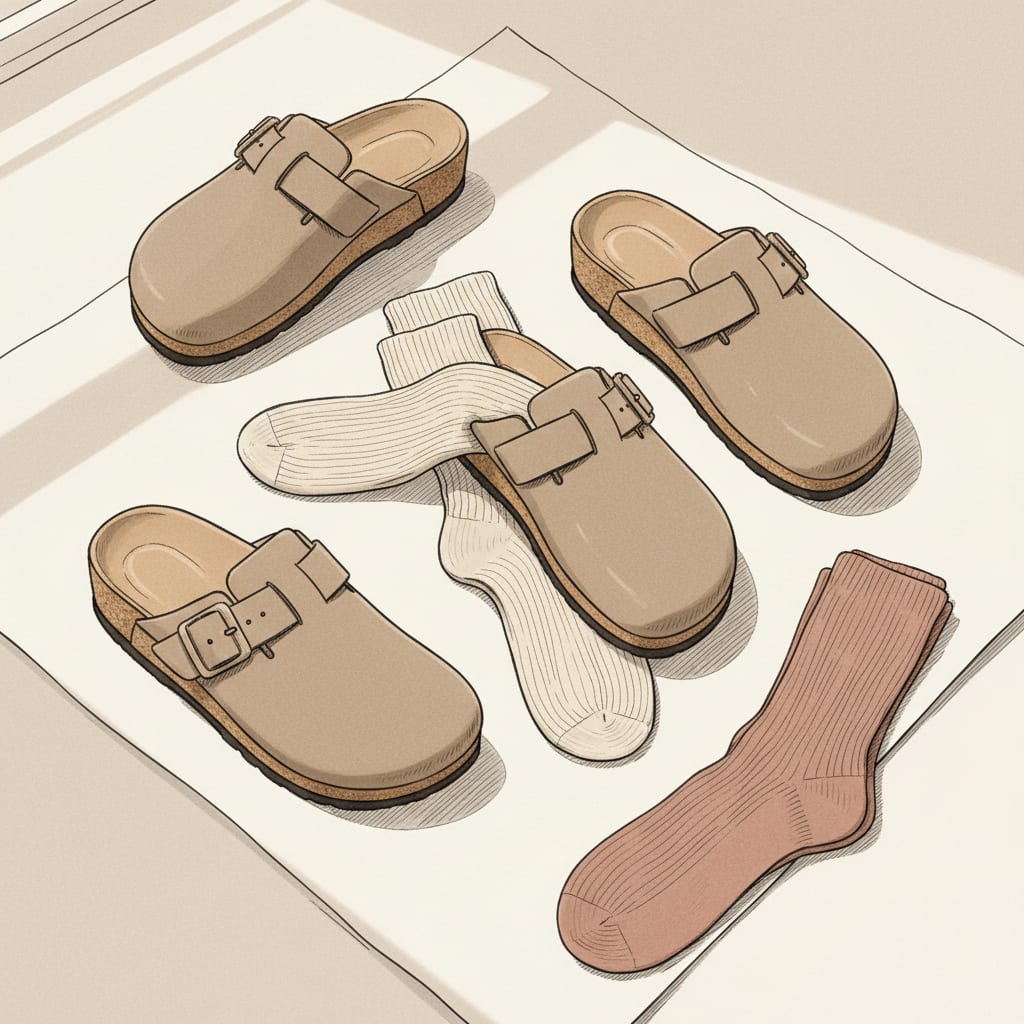
Birkenstock Boston Dupes That Don't Look Like Dupes
Birkenstock Boston dupes that pass at school pickup: suede clogs compared on footbed feel, materials and break-in — and the one case for buying real.
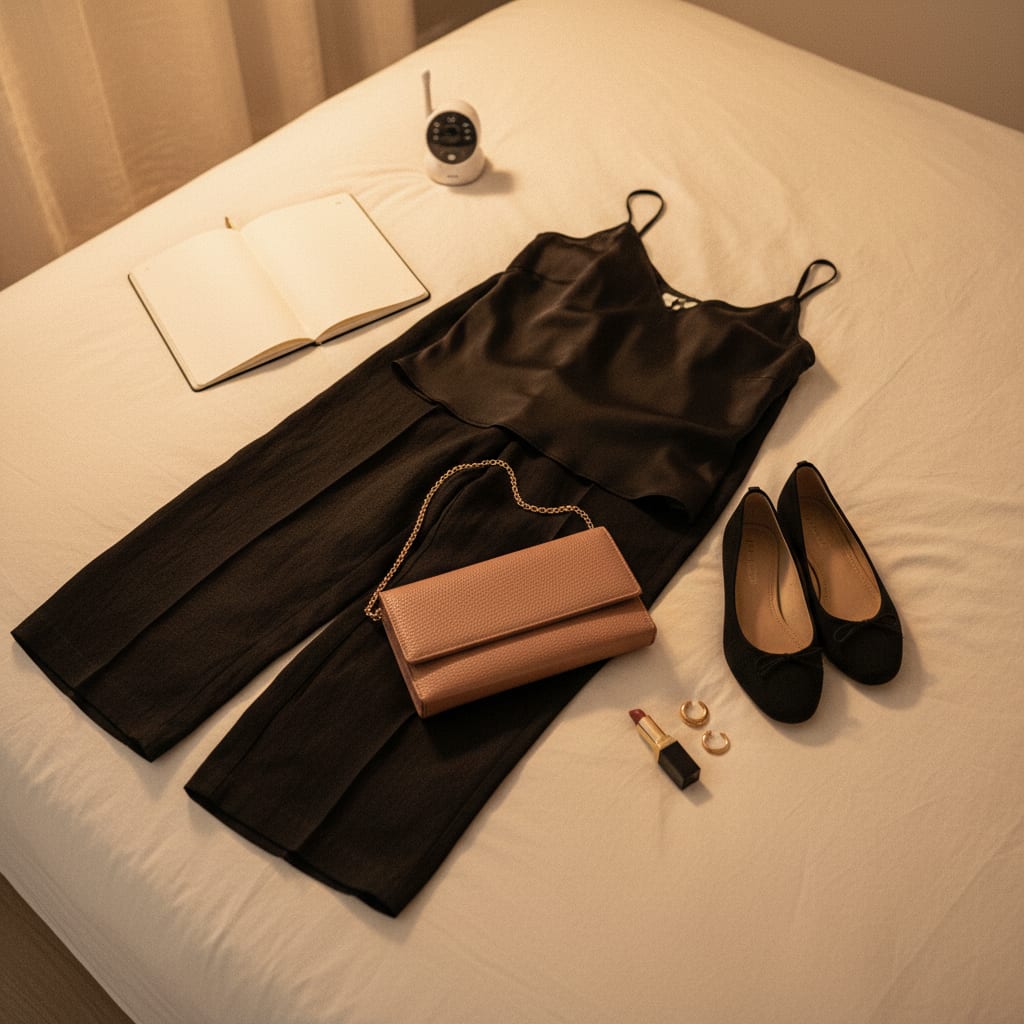
Date Night Without Wrecking Bedtime: A Mom's Playbook
How to plan a date night without wrecking bedtime: the sitter brief, the timing math, and the written sleep plan that keeps the routine intact while you're out.