What Is Smart Casual? A Mom's Translation
Smart casual, decoded: what the dress code actually means, what counts and what doesn't, five outfits to copy, and how it differs from business casual.
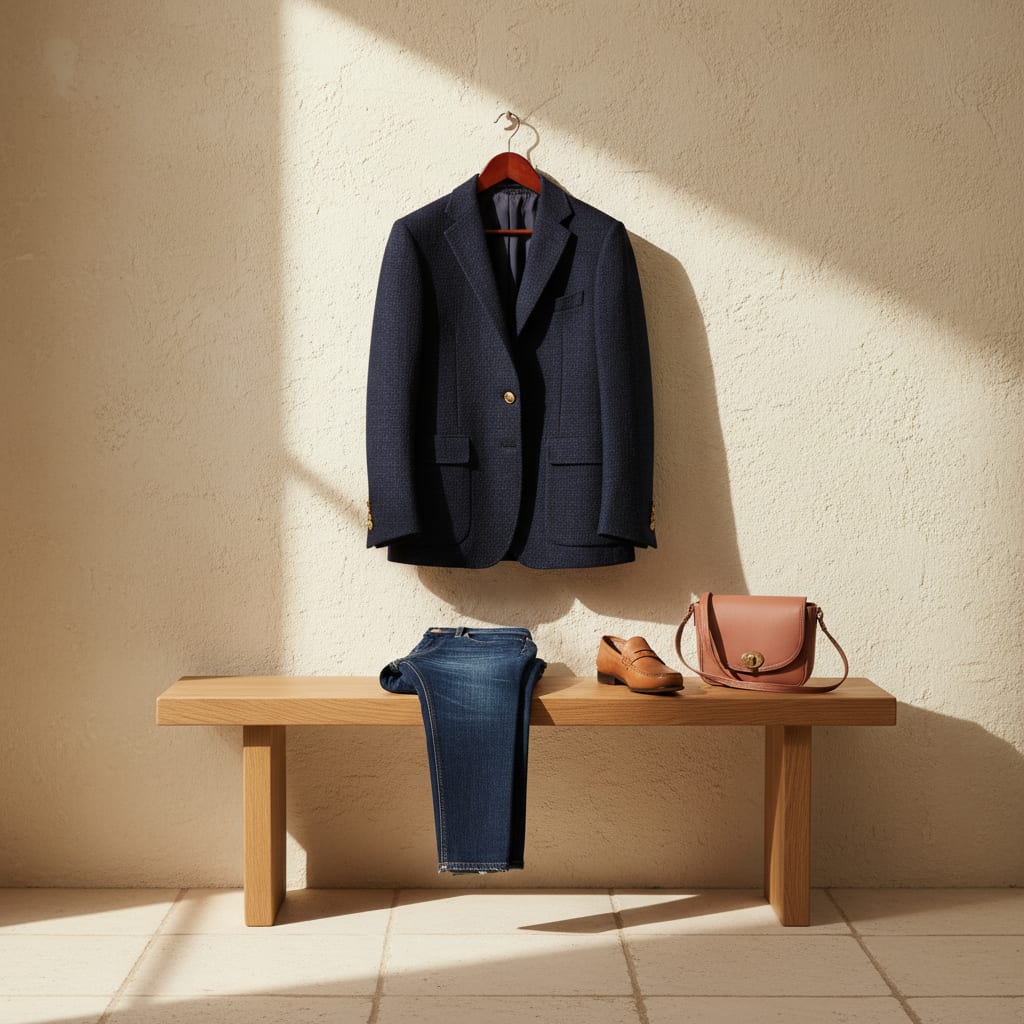
Short answer: smart casual is everyday clothing with one deliberate, tailored element added — usually a structured third piece and a real shoe. It’s the dress code that sits between “jeans and a tee” and “business casual.” Jeans are allowed. Sneakers usually are, if they’re clean leather ones. Leggings, flip-flops, athletic fabrics and anything with a drawstring waist are not. If you own a blazer and a loafer, you already own smart casual.
What the dress code is actually asking for
Every dress code is a question about effort, and smart casual asks for exactly one visible piece of it. Not a suit, not a dress — one item in the outfit that clearly was not thrown on.
The reliable test is this: could you swap one piece and make this outfit into weekend clothes? If yes, you’re dressed smart casual. If it’s already weekend clothes, add the piece. If you couldn’t dress it down at all, you’ve overshot into business casual.
That single deliberate element is almost always one of three things: a structured layer, a leather shoe, or a tailored trouser. You need one. Two is comfortable. Three starts to read as a work outfit.
Smart casual vs business casual vs casual
Casual is what you actually wear: jeans, a tee, sneakers, a sweatshirt. No structure required anywhere.
Smart casual is that, plus one structured or tailored element. Denim stays. Sneakers stay if they’re clean and leather. The outfit reads as considered rather than as workwear.
Business casual is the workplace code: tailored trousers or a skirt, a collared shirt or fine knit, a closed leather shoe. Dark, unripped denim sneaks in at some offices and not at others. No sneakers.
Cocktail is a different universe entirely and nothing here applies.
The confusion is almost entirely between the middle two, and the sharpest difference is denim and sneakers. Smart casual allows both. Business casual, as a rule, allows neither.
What counts, and what doesn’t
Counts as the smart half: a blazer, a trench, a leather or suede jacket, a longline cardigan in a substantial knit, a fine-gauge sweater, a silk or silk-look shirt, a collared shirt, tailored trousers, a midi skirt, a knit dress, a leather bag, a loafer, an ankle boot, a clean leather sneaker, a heeled mule.
Doesn’t count, however nice it is: leggings, athletic fabrics with a visible sheen, a hoodie, a sweatshirt, a drawstring waist, flip-flops or pool slides, foam-soled running shoes, ripped denim, a graphic tee, anything cropped enough to need adjusting when you lift a toddler.
The grey zones: dark, clean, unripped jeans are almost always fine. White leather sneakers are fine at a school event, a casual office or a daytime party, and not fine at a restaurant with tablecloths. A denim jacket is smart casual only if everything else in the outfit is tailored.
The formula, in three pieces
The whole code fits into one repeatable shape: a base pair, a third piece with a shoulder line, and a leather shoe.
The base pair is a bottom and a top you would wear on any ordinary day — straight jeans and a plain knit, tailored trousers and a tee. The third piece is what does the work: blazer, trench, leather jacket, substantial cardigan. The shoe is the second-loudest signal in the outfit and the one people underestimate; a leather loafer and a foam running shoe send opposite messages with the identical outfit above them.
That’s the same three-part structure behind most of the outfits in 10 mom outfit formulas — smart casual is really just that formula with the third piece made non-optional.
Five smart casual outfits to copy
1. Straight jeans + cream knit + blazer + loafers
The default. Works for a parent-teacher evening, a lunch, a casual office, or a Tuesday you want to feel better about.
2. Tailored trousers + white tee + leather jacket + white sneakers
The version that keeps the sneakers. The trouser and the jacket earn them.
3. Knit midi dress + denim jacket + ankle boots
The one-decision outfit. The dress is the tailored element; the jacket dresses it down to smart casual from something more formal.
4. Dark jeans + silk-look shirt + trench + heeled mules
The evening-out version, and the most flexible of the five if the venue is unclear.
5. Midi skirt + fine knit + leather sneakers + crossbody
The daytime one. A pleated or bias-cut skirt reads as effort even when the top half is a plain sweater.
For a school-run-specific version of this — the same structure, assembled faster — see school drop-off outfits.
Fit Notes: getting the level right
When the invitation says smart casual, dress one notch up. Being slightly overdressed is invisible; being underdressed is the thing you’ll think about all evening. The blazer can come off. The sneakers can’t become loafers.
Fabric decides more than shape. A knit blazer in a matte, substantial fabric reads smart. The same silhouette in a shiny performance fabric reads athletic. If you touch it and it feels like activewear, so does the outfit.
Fit is the whole game at this dress code. Smart casual has no formality to hide behind, so a too-long sleeve or a pooling hem is the only thing anyone notices. Hem the trousers. It costs less than a new pair and does more.
Neutrals carry it further than color. Navy, cream, camel, brown, black and denim make almost any combination read intentional — which is why the palette advice in what colors go with navy is worth more here than any single garment.
One accessory, chosen once. Gold hoops or a leather crossbody. Smart casual falls apart from over-styling far more often than from under-styling.
When the dress code doesn’t say
Most events don’t tell you. The reliable read: daytime and indoors leans casual; evening and a restaurant leans smart. Add the tailored piece for evening, drop it for daytime, and keep the leather shoe either way.
If it’s a work-adjacent event, dress to the more formal end — that’s where the difference between this and true business casual actually matters. The everyday, non-event version of the same wardrobe is in elevated casual outfits.
FAQ
What does smart casual mean for women?
Everyday clothing with one deliberate, tailored element — usually a structured third piece like a blazer or trench, plus a real leather shoe. Jeans are allowed; leggings, athletic fabrics, hoodies and flip-flops are not.
Are jeans smart casual?
Yes, if they’re dark, clean and unripped, and the rest of the outfit supplies the structure. A straight or wide-leg cut in a dark wash with a blazer and a loafer is a textbook smart casual outfit. Distressed or very light denim is not.
Can you wear sneakers with smart casual?
Usually, if they’re clean leather sneakers in a low, plain court shape — not foam-soled running shoes. They work best when the rest of the outfit is tailored. For an evening event or anywhere with a formal dining room, choose a loafer or a boot instead.
What’s the difference between smart casual and business casual?
Denim and sneakers. Smart casual allows both; business casual generally allows neither, and expects a tailored trouser or skirt with a collared shirt or fine knit. Business casual is the more formal of the two.
What should I wear to a smart casual event if I’m unsure?
Dark straight-leg jeans or tailored trousers, a plain fine knit, a blazer or trench, and a leather loafer or ankle boot. It sits at the top of smart casual and the bottom of business casual, so it’s correct at either — and the blazer can come off if the room turns out to be more relaxed.
Keep Reading

The New-Mom Gift Guide: What She Actually Wants in 2026
Gifts new moms actually use — no novelty mugs. The Betteroo sleep app that saved us, the robe that isn't hideous, and more picks grouped by budget.
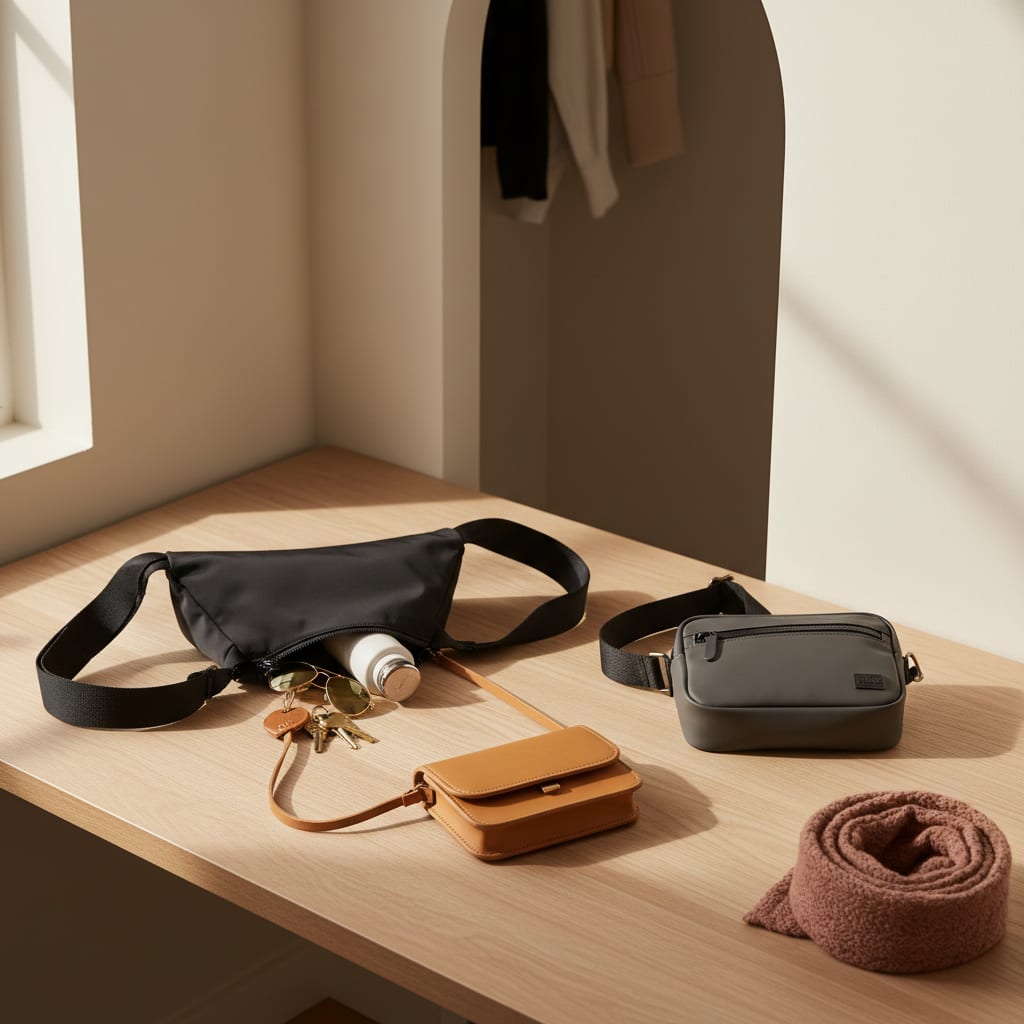
Best Crossbody Bags for Moms (Diaper Bag Optional)
The crossbody bags that replace a diaper bag once the bottles stop — five picks by capacity, plus the strap length and closure details that actually matter.
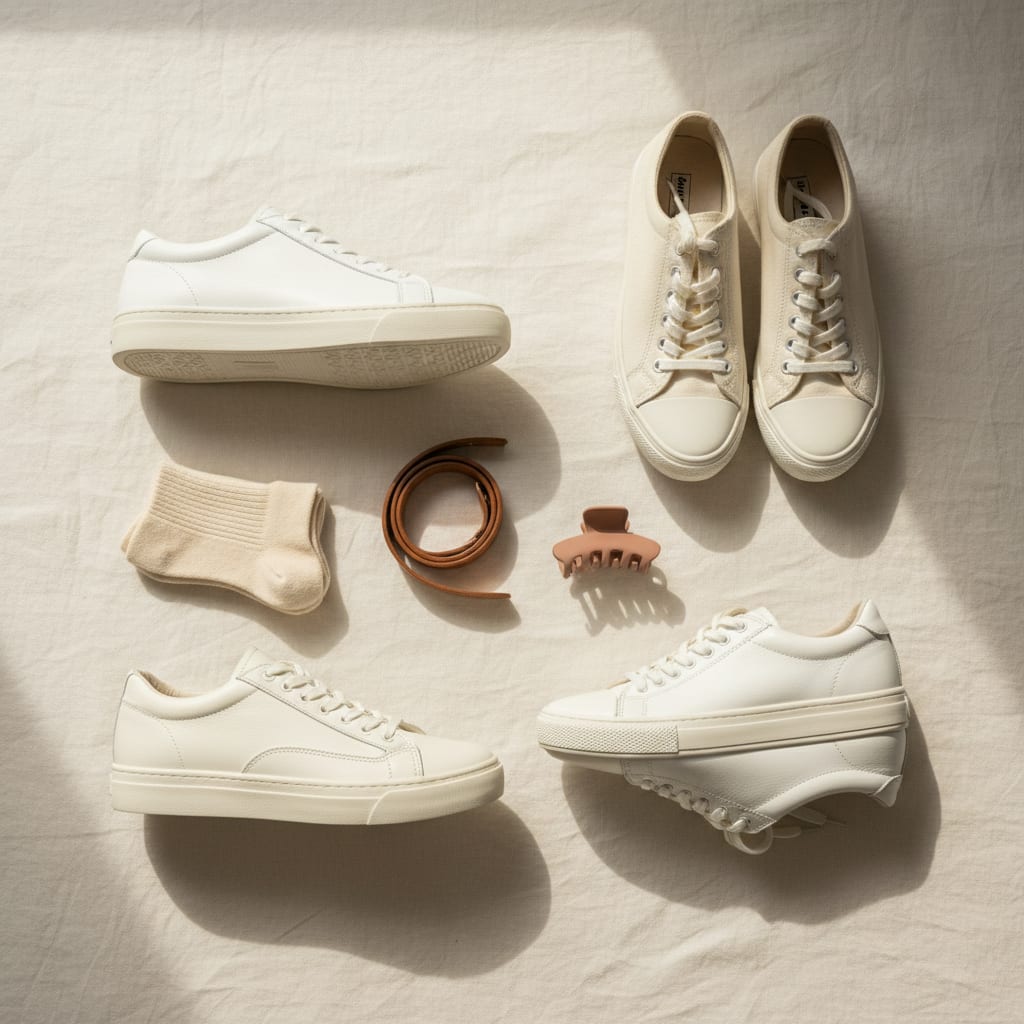
Best White Sneakers for Moms: 7 Pairs That Hold Up
The white sneakers worth buying for school runs and playgrounds — leather vs canvas, what each pair is actually built for, and how to keep them white.