School Drop-Off Outfits: Look Awake in 90 Seconds
School drop-off outfits that take ninety seconds: the two-piece rule, eight get-out-of-the-car combinations, and the three things that undo the whole look.
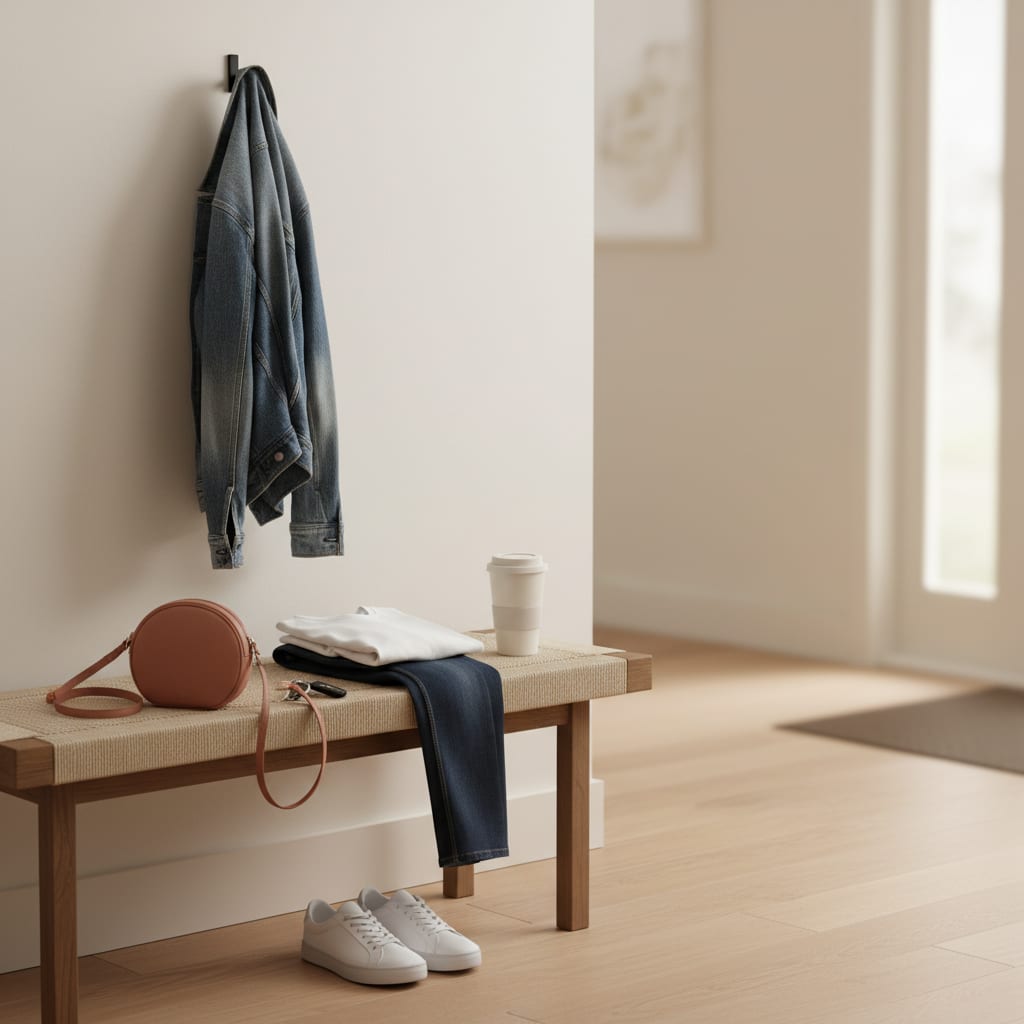
Short answer: a school drop-off outfit is one soft piece plus one structured piece plus real shoes. That’s the whole formula. Soft gives you the speed and the comfort; structure is what stops it reading as pajamas; real shoes are what let you get out of the car. Choose the pieces the night before, keep them in one place, and the whole thing takes ninety seconds with a toothbrush in your mouth.
Drop-off is the most-repeated outfit of the school year — roughly 180 mornings, most of them in a hurry, some of them in front of every other parent in your child’s class. It deserves a system, not a scramble.
The two-piece rule
Every outfit below is a soft piece and a structured piece.
Soft = leggings, joggers with a real waistband, a knit dress, a sweatshirt that fits at the shoulder, a knit set.
Structured = a denim jacket, a knit blazer, an oversized button-down worn open, a long wool-look coat, a belt bag with a defined shape, real shoes.
One of each, every time. Two soft pieces is the “did you sleep in that” look; two structured pieces is too much effort for 8:05 a.m.
The car-only vs. the get-out test
Be honest about which morning you’re having, because they have different standards.
Car-only drop-off (you never leave the driver’s seat): the structured piece can be the jacket you keep on the passenger seat. Nobody sees below your ribs. This is the one morning slides are defensible.
Walk-in drop-off (playground, classroom door, chatting to another parent): you’re fully visible, standing, probably crouching to zip a coat. Real shoes, a bottom half you’d wear to a coffee shop, and hair off your face. Two thirds of the mornings I’ve mistimed have been the day I dressed for car-only and had to walk in.
Eight drop-off outfits
- Straight jean + fitted tee + denim jacket + white sneaker. The default. A leather-look sneaker like the adidas Stan Smith survives wet grass and wipes clean, which canvas does not.
- Leggings + longline tank + oversized button-down open + sneaker. The shirt is the structure and the coverage in one move.
- Knit T-shirt dress + sneaker + crossbody. One decision, no waistband. A soft viscose midi like this jersey T-shirt dress is the “I have nothing to wear” insurance piece — pull it on and you’re finished.
- Joggers + fitted knit + knit blazer + loafer. Reads as trousers from ten feet.
- Wide-leg knit trouser + tank + long cardigan + flat sandal. The warm-weather version.
- Matching knit set + white sneaker + belt bag. The set does the coordinating for you; the bag makes it look styled. My belt bag dupes roundup covers the versions that fit a phone, keys and a snack.
- Jean + fine knit + long coat + boot. The cold-morning uniform, and the one that photographs well at the school gate in November.
- Leggings + hoodie in a good color + clean sneaker + gold hoops. The genuinely-running-late option. Heather grey reads as gym; a warm neutral or a deep color reads as a choice.
Drop-off by weather
The two-piece rule survives every forecast. What changes is which piece is doing the structure.
Cold and dry. The coat is the structured piece, so the soft half underneath can be genuinely anything — this is the one morning a sweatshirt is beyond criticism. What undoes it is the shoe: a sheepskin-lined boot with a soft sole reads as indoor footwear the second you’re standing on tarmac. Keep one pair of hard-soled boots for the school run and let the cosy ones stay home.
Rain. A hood beats an umbrella when you’re already carrying a lunchbox and somebody’s hand. A water-resistant shell is the structured piece; underneath it, anything. Shoes are the whole decision — a wipeable leather-look sneaker survives, canvas absorbs, and suede is a one-morning mistake you’ll regret for a season.
Forty degrees at 8 a.m., seventy by lunch. The hardest forecast, and the fix is a layer you can remove without dismantling the outfit. A shirt jacket or an open button-down comes off and what’s underneath is still a finished look; a sweatshirt comes off and you’re standing in a tank top. Choose the removable layer, not the warm one.
Heat. Leggings are the wrong answer and everyone knows it by the second week. A knit T-shirt dress or a wide-leg trouser in a flat, breathable knit does the same job with airflow, and the structured half becomes the shoe and the bag rather than a jacket.
Snow and ice. The honest version: real boots, and the outfit stops at the ankle. Nobody at the classroom door is assessing your footwear in February — they’re assessing whether you can walk.
The errands version (when drop-off isn’t the last stop)
Two mornings that look identical from the driveway need different outfits, and the difference is exactly one piece.
The 90-second version. Soft piece, structured piece, shoes. You are going to the school and back to your own kitchen. Stop dressing.
The errands version. The same two pieces plus one upgrade item that lives by the door — a knit blazer like the Amazon Essentials ponte blazer, a structured bag instead of the soft one, or swapping the sneakers for a loafer. One piece, not three. The point of an upgrade item is that it turns an existing outfit into a different one without you changing anything underneath it.
The rule I actually use: if the day contains anything with a name — dentist, a return, coffee with a person, a parcel that needs a counter — the third piece goes on before I leave the house. Putting it on at home is a decision that takes four seconds. Putting it on in a car park is a negotiation with a car seat.
And pack the bag for the second errand, not the first. A crossbody with a phone, keys, card and one return label in it is a morning that ends at 11 a.m.; a tote you have to repack in the driver’s seat is a morning that ends at two.
The three things that undo it
Pajama-adjacent bottoms. Flannel, drawstring plaid, anything with an elasticated ankle and a fleece lining. It’s visible from a distance and it’s the one thing that can’t be rescued by good shoes.
Slides with socks in the winter. Fine in the car. Devastating at the classroom door.
A giant tote instead of hands-free. You’re carrying a lunchbox, a book bag someone forgot, and a coffee. A crossbody or belt bag is a comfort decision, not a style one. If you’re on your feet for a walk-in drop-off every day, the shoes matter as much — the best walking sandals roundup is my warm-weather answer to exactly this.
Set it up the night before
The system beats the outfit. Pick the two pieces before bed, put them on the same chair, and leave the shoes by the door with the bag already loaded. It’s a version of the same logic as the capsule wardrobe method: reduce the number of live decisions and mornings stop being a negotiation. If you want the recipes rather than the pieces, the mom outfit formulas post has ten of them memorized down to swap-ready parts.
FAQ
What should a mom wear to school drop-off?
One soft piece and one structured piece, plus shoes you can walk in — for instance leggings with an open button-down and sneakers, or a knit dress with a denim jacket. It takes ninety seconds and holds up whether you get out of the car or not.
Are leggings okay for school drop-off?
Yes, with a third piece. Leggings alone read as gym clothes; leggings with an oversized shirt, a long cardigan or a knit blazer plus clean sneakers read as an outfit. Opaque, non-pilling leggings are the ones worth owning for this.
How do I look put together in the morning without more time?
Choose the two pieces the night before and keep one accessory permanently on — hoops you sleep in, or a belt bag that lives by the door. Decisions cost more morning minutes than dressing does.
What shoes work best for school drop-off?
A wipeable leather-look sneaker for most of the year, a flat sandal in summer, and an ankle boot in the cold. All three should be shoes you can cross a wet playground in without thinking about them.
Keep Reading
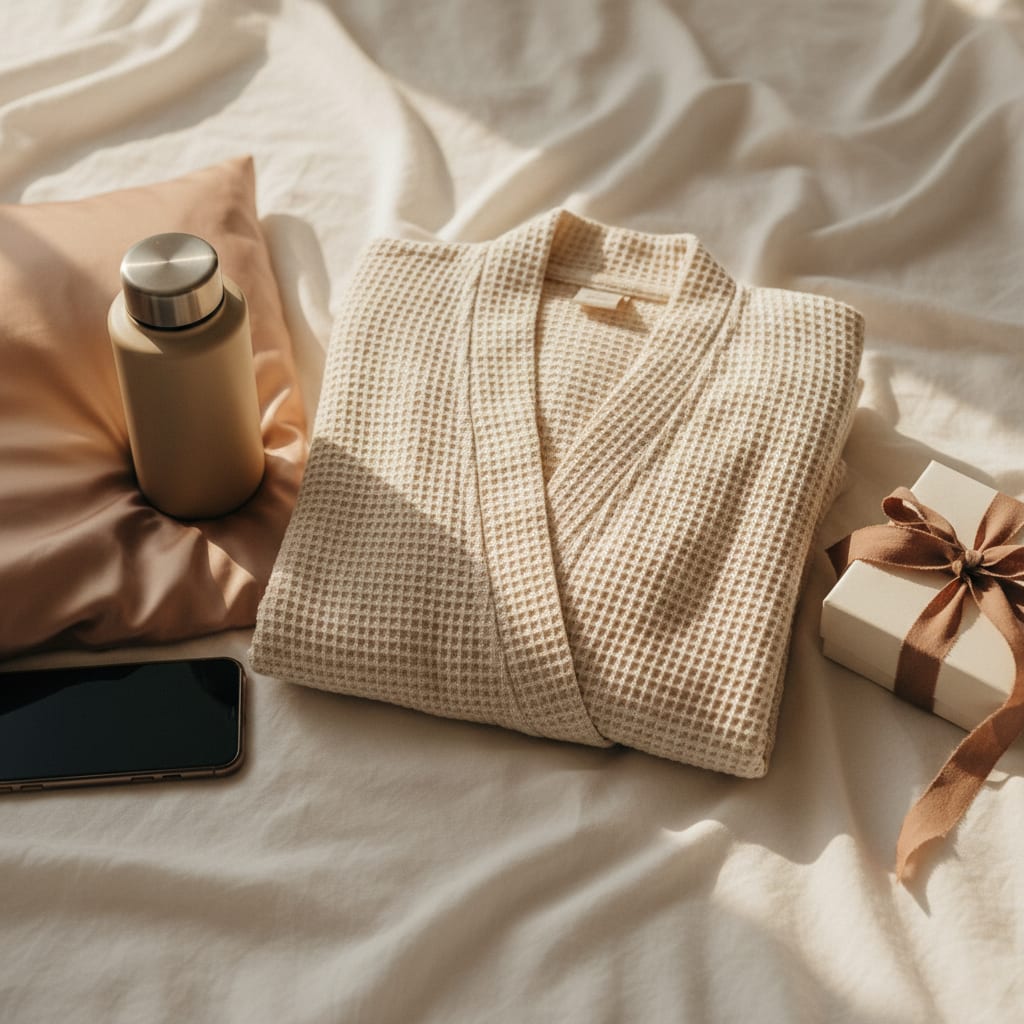
The New-Mom Gift Guide: What She Actually Wants in 2026
Gifts new moms actually use — no novelty mugs. The Betteroo sleep app that saved us, the robe that isn't hideous, and more picks grouped by budget.
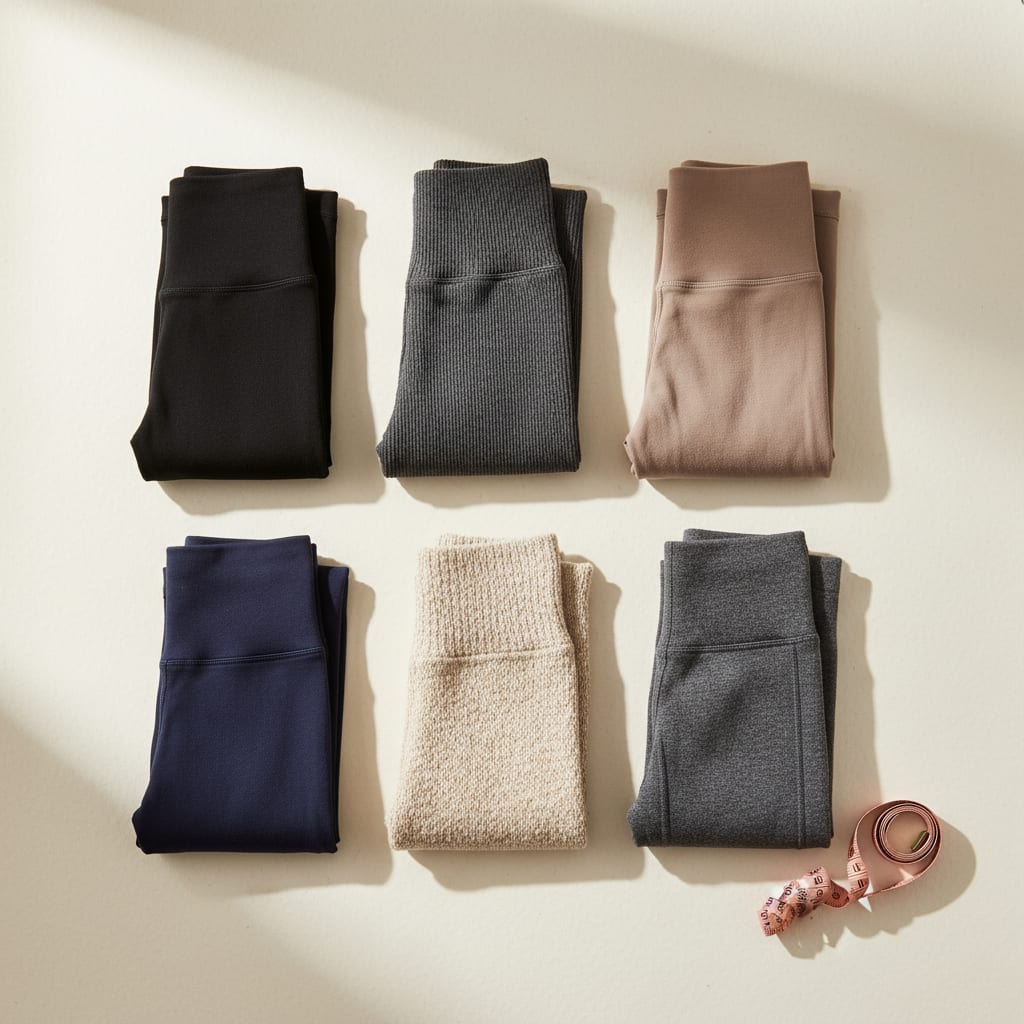
Amazon Legging Brands, Compared (Not Just CRZ)
The Amazon legging brands worth knowing beyond CRZ Yoga — HeyNuts, Colorfulkoala, Sunzel, IUGA and 90 Degree — compared on fabric, fit, pockets and job.
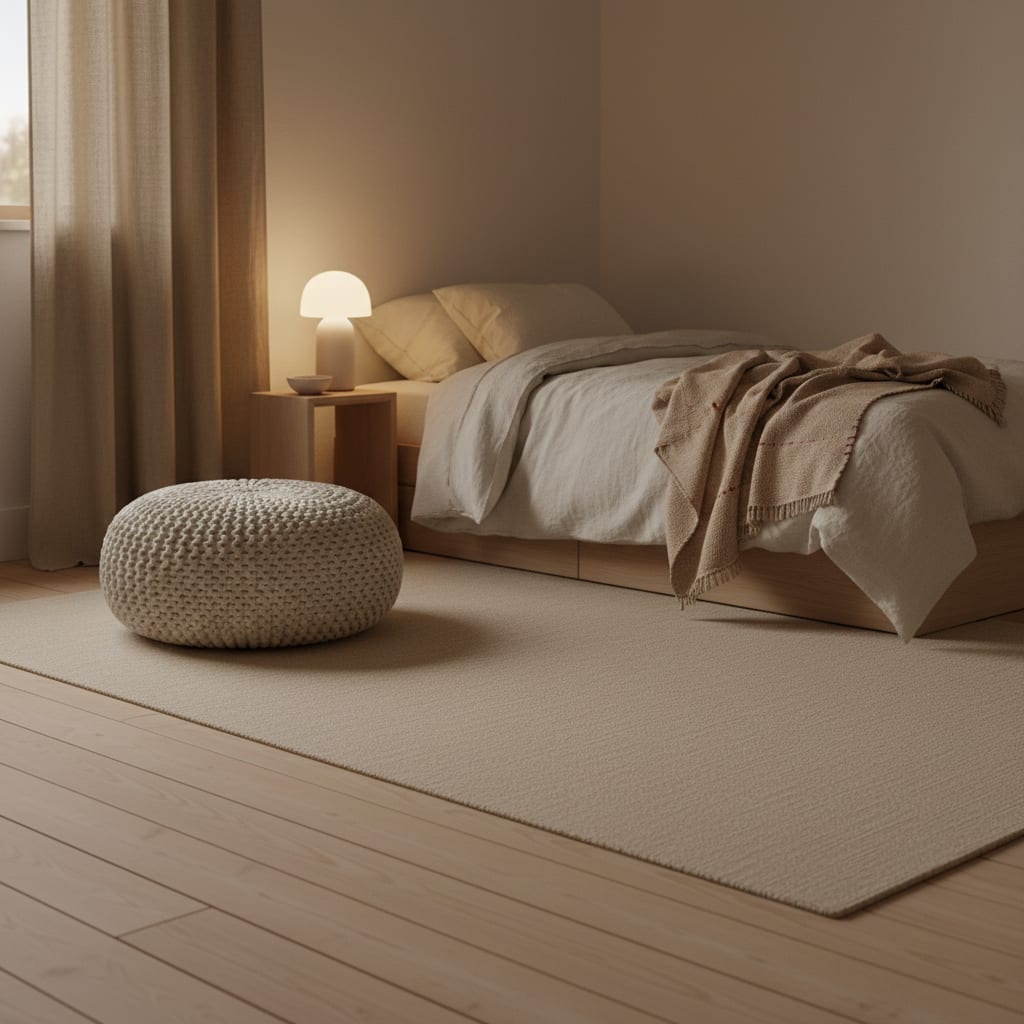
Carpet Swapped for Floorboards? Why Your Child Won't Sleep
New floorboards and suddenly bedtime falls apart? Why a room without carpet sounds, feels and smells different at night, and the rug-and-textile fixes.