Ugg Tasman Dupes That Pass the Side-by-Side Test
The UGG Tasman dupes that hold up next to the real thing — the braided-collar lookalikes worth buying, the ones that flatten fast, and when to just buy UGG.
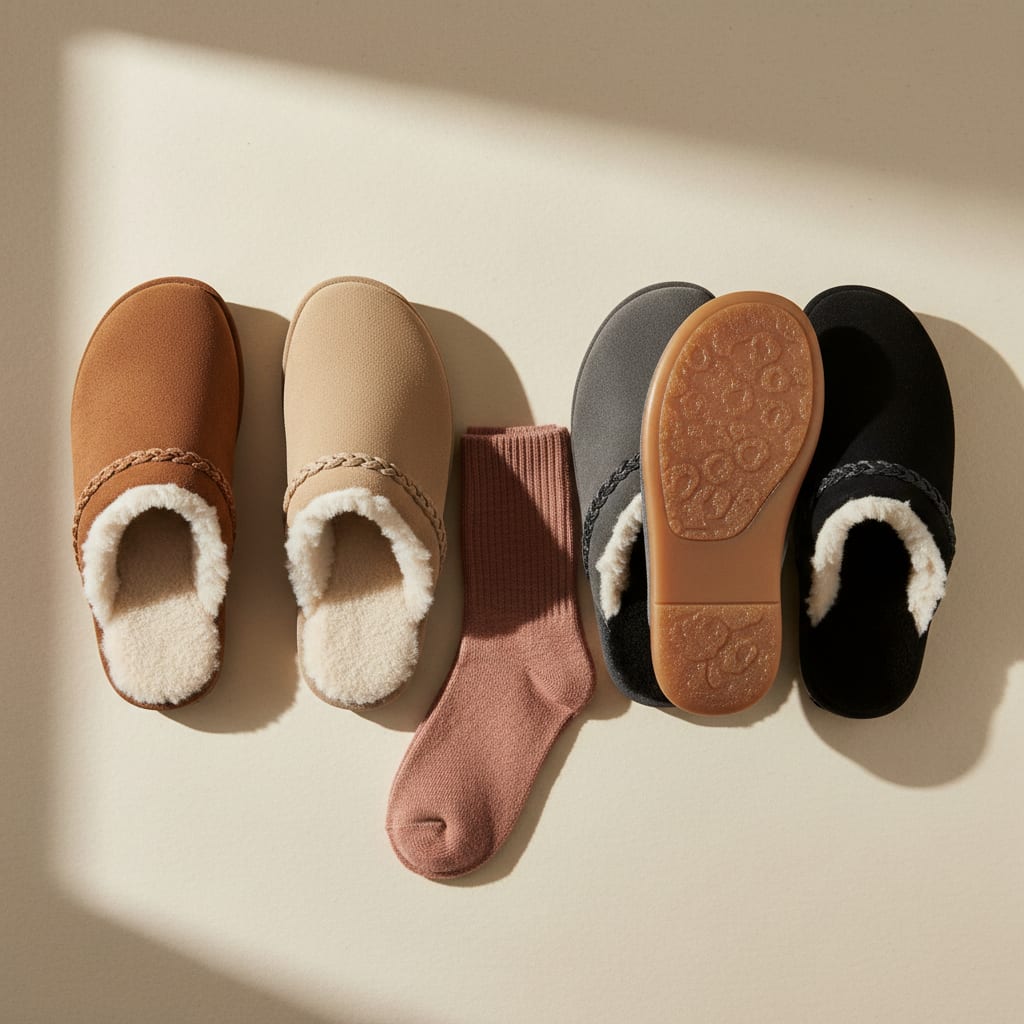
Short answer: the Tasman dupes that survive a side-by-side comparison are the ones with a real suede upper and a structured collar — and the closest of them all is made by UGG’s own diffusion label. The Tasman’s whole identity is three details: the backless clog shape, the braided collar trim, and a sole solid enough to wear to the mailbox. Copy all three and nobody clocks it. Copy two and it reads as “a slipper.” Here’s the field, ranked by how close they actually land.
What makes a Tasman a Tasman
The original is a suede clog slipper with a wool lining, a flat backless heel, and a braided trim running around the collar — that braid is the visual signature, the thing your eye actually recognizes from across a parking lot. Underneath, it’s built with a real outsole rather than a soft house-slipper base, which is why people wear Tasmans outside in a way they’d never wear a moccasin.
So a dupe has three jobs: get the collar trim right, use suede rather than a shiny synthetic, and put a proper sole on it. Miss the trim and it’s just a scuff. Miss the suede and it creases into shiny lines by January. Miss the sole and it’s a house shoe pretending. This is the same materials-over-silhouette logic I applied to the Ultra Mini dupe field — the shape copies for pennies, the materials are where the money went.
The dupes, ranked
1. Koolaburra by UGG’s Burree slipper — the closest thing on the market. This is the one every roundup lands on, and the reason is slightly funny: Koolaburra is UGG’s own lower-priced diffusion line, so you’re buying a Tasman lookalike from the company that makes Tasmans. Suede upper, faux fur lining, the correct backless clog silhouette, and a collar detail that reads right at a glance.
Fit Notes: buyers consistently report a fit close to true to size, with a snug slip-on entry that eases after a week — the same break-in pattern the original has. The lining is faux rather than sheepskin, which means it’s plush on day one and packs down faster than the real thing over a season.
2. Koolaburra’s Milo scuff — the softer, slouchier cousin. Same brand, same suede-and-faux-shearling build, but a plainer backless scuff shape without the braid. It’s a step further from the Tasman visually and a step closer to pure comfort. If you like the Tasman idea but find the collar trim a bit much, this is the quieter version.
Fit Notes: runs true for most; the backless entry is genuinely lazy-friendly, which is the whole point of a scuff. The rubber sole handles a driveway and a school parking lot fine, which is more than a fabric-soled slipper manages.
3. BEARPAW’s Loki — the sheepskin-lined value pick. Bearpaw is the other legacy budget-shearling brand, and it’s the one that most reliably puts real suede uppers and sheepskin or wool-blend linings at a low price. The Loki is a slide rather than a true clog, so the silhouette is looser than a Tasman, but the material story is stronger than most dupes twice its price.
Fit Notes: the recurring note is a roomy fit — between sizes, most buyers go down. Roominess is great with a thick sock and sloppy without one. Treat the suede with a protector spray before first wear; budget suede spots in slush faster than UGG’s does.
4. CUSHIONAIRE’s Hush suede mule — the fashion-forward one. Cushionaire is the brand that already earned a spot in my Birkenstock Boston dupe roundup for doing genuine suede at a low price, and the same trick applies here: real suede upper, faux fur lining, memory-foam-style footbed. It’s the least Tasman-shaped pick on this list — more of a cozy mule than a clog — but it’s the one that looks most like a deliberate shoe choice rather than a lookalike.
Fit Notes: buyers describe it as comfortable immediately, without the break-in period the suede-clog styles need. The trade is a softer structure — it won’t hold the crisp clog shape as long.
5. The unbranded synthetic Tasmans. The ones with “faux suede” in the listing and a price that seems impossible. They photograph beautifully and then do the four things budget synthetics always do: crease into shiny lines, mat flat inside, stop breathing (so your feet get cold, which is a special kind of insult in a fur-lined shoe), and crumble at the sole edge. Fine as a trend test. Not fine as a shoe you’ll wear November to March.
The side-by-side test, honestly
Put a real Tasman next to each of these and here’s what gives a dupe away, in order of how quickly you’d notice:
- The collar trim. Braid that’s flat, glued-looking, or the wrong scale is the first tell. Koolaburra’s is the closest because it’s essentially the same design language.
- The suede’s nap. Real suede has a directional, slightly velvety surface that catches light unevenly. Synthetic suede is uniform and, in bright light, faintly plasticky.
- The sole profile. The original’s outsole is thin but genuinely rubber-molded. Cheap dupes use a chunkier foam that rounds off at the heel within a season of pavement.
- The lining, after ten weeks. Every dupe lining flattens. Sheepskin and wool blends flatten slower, which is why the Bearpaw class ages better than its price suggests.
Nobody at pickup is inspecting nap direction. But you’ll notice the flattened lining in February, which is the difference between a one-winter shoe and a three-winter one.
When to just buy the Tasman
Three cases. First, if you wear this style essentially daily from October to March, real twin-faced sheepskin is warmer, molds to your foot, and takes cleaning and re-fluffing far better than a glued synthetic liner — the per-wear math flips fast. Second, if it’s a gift for a teenager, who will absolutely check, and for whom the visible braid is functionally the entire product. Third, if you’ve already replaced a dupe pair once; two dead dupes cost more than one original Tasman, and at that point thrift has quietly become a subscription.
For everyone else — occasional wear, trend testing, a second pair to keep by the door — the top two picks above get you the whole look and most of the warmth for meaningfully less. Same conclusion I reached about mid-tier winter footwear generally in my winter boots roundup: buy the middle of the market, not the bottom.
FAQ
What is the best UGG Tasman dupe?
Koolaburra by UGG’s Burree slipper — it’s made by UGG’s own diffusion label, uses a suede upper, and gets the backless clog shape and collar detail closest to the original. Bearpaw’s Loki is the best value alternative if you want a sheepskin-family lining for less.
Are UGG Tasman dupes worth it?
For occasional wear, yes — the good ones deliver the look and most of the warmth at a fraction of the price. For daily all-winter wear, the original’s twin-faced sheepskin lasts noticeably longer, and the cost per wear closes the gap.
How do Tasman dupes fit compared to the real thing?
Real Tasmans are worn snug because sheepskin packs down over time. Most dupes have synthetic linings that pack down less, so buy them comfortable rather than tight. Koolaburra styles run close to true; Bearpaw runs roomy; unbranded Amazon listings trend about a half size large.
Can you wear Tasman-style slippers outside?
Yes, in dry cold — that’s the point of the rubber outsole and why this style outsold every fabric-soled slipper. Slush and deep snow are a different shoe entirely, for the dupes and the original alike. Use a suede protector spray either way.
What should I look for in a Tasman dupe listing?
Three words in the materials line: suede (not “faux suede”), a wool or sheepskin blend lining rather than pure polyester fluff, and a rubber outsole. If a listing hides the material description or leads with “fur-like,” it’s a one-winter shoe.
Keep Reading
The New-Mom Gift Guide: What She Actually Wants in 2026
Gifts new moms actually use — no novelty mugs. The Betteroo sleep app that saved us, the robe that isn't hideous, and more picks grouped by budget.
Stocking Stuffers for Women That Don't Feel Like Filler
Stocking stuffers for women that get used instead of regifted: small gifts sorted by the job they do, plus the four categories worth leaving out entirely.

Child Sweating at Night? The Pajama Fabric Guide
Child waking hot with damp hair? Why kids sweat at night, how cotton, bamboo, merino and fleece pajamas each handle it, and the signs that it isn't the fabric.