Best Winter Boots for Women Who Do the School Run (2026)
The best winter boots for women, picked by scenario: slushy school runs, real cold, and boots that feel like sneakers — with warmth and traction criteria.
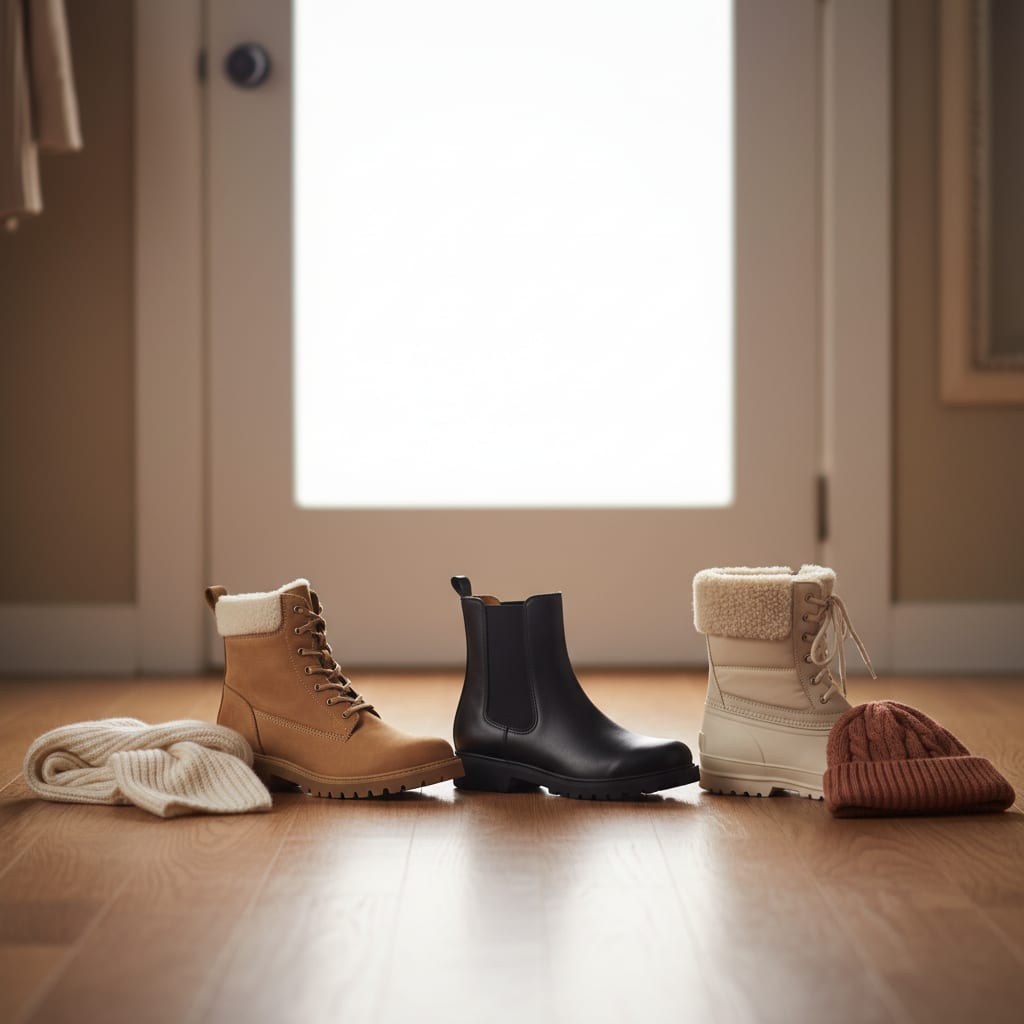
Winter with kids means standing on a frozen sideline, scraping a windshield while someone narrates, and crossing the same icy parking lot four times a day.
If you only buy one pair, make it a waterproof lace-up with a lugged rubber outsole and real insulation — the “school-run workhorse” below — because it covers slush, cold, and cute-enough in a single boot. But scenario-specific boots exist for a reason, so here’s the full lineup, plus the warmth-and-traction criteria that separate real winter boots from boot-shaped shoes.
What actually makes a winter boot (60-second criteria)
- Waterproof, not water-resistant. Resistant means “fine in mist.” Waterproof means sealed seams and a membrane. Slush finds the difference in under a minute.
- Lugged rubber outsole. Deep, widely spaced tread. If the sole is smooth or the lugs are shallow style-lugs, it’s a fall boot doing winter cosplay.
- Actual insulation. Lined means fuzzy; insulated means warm. For standing-around cold (sidelines, sledding supervision), you want insulation ratings or shearling-style loft, not just a soft interior.
- On-off speed. You will put these on eleven times a day. Zips, pull tabs, or a wide shaft matter more than any spec sheet admits.
The school-run slush boot (the workhorse)
A waterproof lace-up or Chelsea with a chunky lugged sole and a warm lining, ankle-to-mid height. This is the boot that lives by the door from November to March — pumps through puddles, grips wet crosswalk paint, looks legitimate with straight jeans. It’s the winter version of the ankle-boot slot in my capsule wardrobe, and it earns cost-per-wear faster than anything else you’ll buy all year.
Fit Notes: buy these to fit with midweight socks — true to size usually works, but if you’re between, go up. A too-snug winter boot is a cold boot; compressed toes lose heat. Chelseas run wide at the ankle by design; narrow ankles should choose laces.
The actually-cold boot (single digits and sidelines)
When it’s genuinely cold — sledding hills, January sports sidelines, snow-day supervision — style concedes to physics. You want a tall insulated snow boot: waterproof shell bottom, serious insulation, a collar that seals out snow. Nobody’s winning fashion week at the ice rink, and the warm mom outlasts the cute mom by two full periods.
Fit Notes: insulated snow boots run big because they’re built for thick socks — most people stay true to size and skip the urge to size up. Check the shaft opening if you have athletic calves; the drawcord collar styles are far more forgiving than fixed cuffs.
The looks-like-a-boot, feels-like-a-sneaker boot
The hybrid category that quietly took over school pickup: sneaker cushioning inside a boot silhouette, usually with a waterproof upper and a lugged sole. If your winter is more wet-and-40s than arctic, this might be your only boot — all-day comfortable, zero break-in, handles 12,000 steps the way my walking sandals do in July.
Fit Notes: these follow sneaker sizing, not boot sizing — order what your sneakers are. The cushioned footbeds run cozy-snug at first and relax within a week.
The “still a boot, but for dinner” pair
One pair that does school concerts, holiday dinners, and family photos: a shearling-lined Chelsea or a sleek waterproof heeled boot with — non-negotiable — a rubber outsole. The parking lot outside the restaurant is just as icy as the one outside the school.
Fit Notes: dressier boots cut slimmer through the toe box; if you’ll wear real socks (you will, it’s January), size up half.
The budget play
If the budget covers one boot, buy the workhorse and spend where the criteria live: waterproofing and outsole. If it covers two, add whichever matches your climate — the snow boot for real winters, the sneaker-hybrid for mild ones. The dinner boot is the luxury slot; a workhorse in black covers 80% of its job description while you wait.
Worth it? A good winter boot is a 120-wear-per-season item. Almost nothing else in your closet touches that math.
FAQ
What are the warmest winter boots for women?
Tall insulated snow boots with a waterproof shell bottom and sealed collar are the warmest category — built for standing still in real cold, which is harder on feet than walking. For everyday errands, a well-lined waterproof boot is plenty; save the expedition-grade pair for sidelines and sledding.
What’s the difference between waterproof and water-resistant boots?
Waterproof boots have a membrane and sealed seams that block standing water and slush; water-resistant boots have treated fabric or leather that sheds light moisture only. For winter school runs, waterproof is the requirement — slush is standing water with a grudge.
Are winter boots supposed to be a size bigger?
Not automatically. You want room for a midweight sock and a wiggle of toe space — for most people that’s their true size, or a half up if between sizes. Too big causes heel-slip blisters; too snug compresses toes and makes feet colder.
Can winter boots be stylish and functional?
Yes — the lugged-sole Chelsea and the sneaker-boot hybrid both pass the coffee test and the ice test. The rule: never sacrifice the outsole or the waterproofing for looks. Plenty of boots now offer all three; the ones that don’t are fall boots with marketing.
Keep Reading
The New-Mom Gift Guide: What She Actually Wants in 2026
Gifts new moms actually use — no novelty mugs. The Betteroo sleep app that saved us, the robe that isn't hideous, and more picks grouped by budget.

Child Sweating at Night? The Pajama Fabric Guide
Child waking hot with damp hair? Why kids sweat at night, how cotton, bamboo, merino and fleece pajamas each handle it, and the signs that it isn't the fabric.
What Colors Go With Burgundy: 10 Outfit Combos
The colors that genuinely work with burgundy, ten outfits to copy, the shoes and metals that flatter it, and the two pairings that tip straight into Christmas.