Sunburned Child Can't Sleep? How to Help Them Settle
How to help a sunburned child sleep after a beach day: a cool bath, aloe, what to wear to bed over a burn, the sheets, and when sunburn needs a doctor.
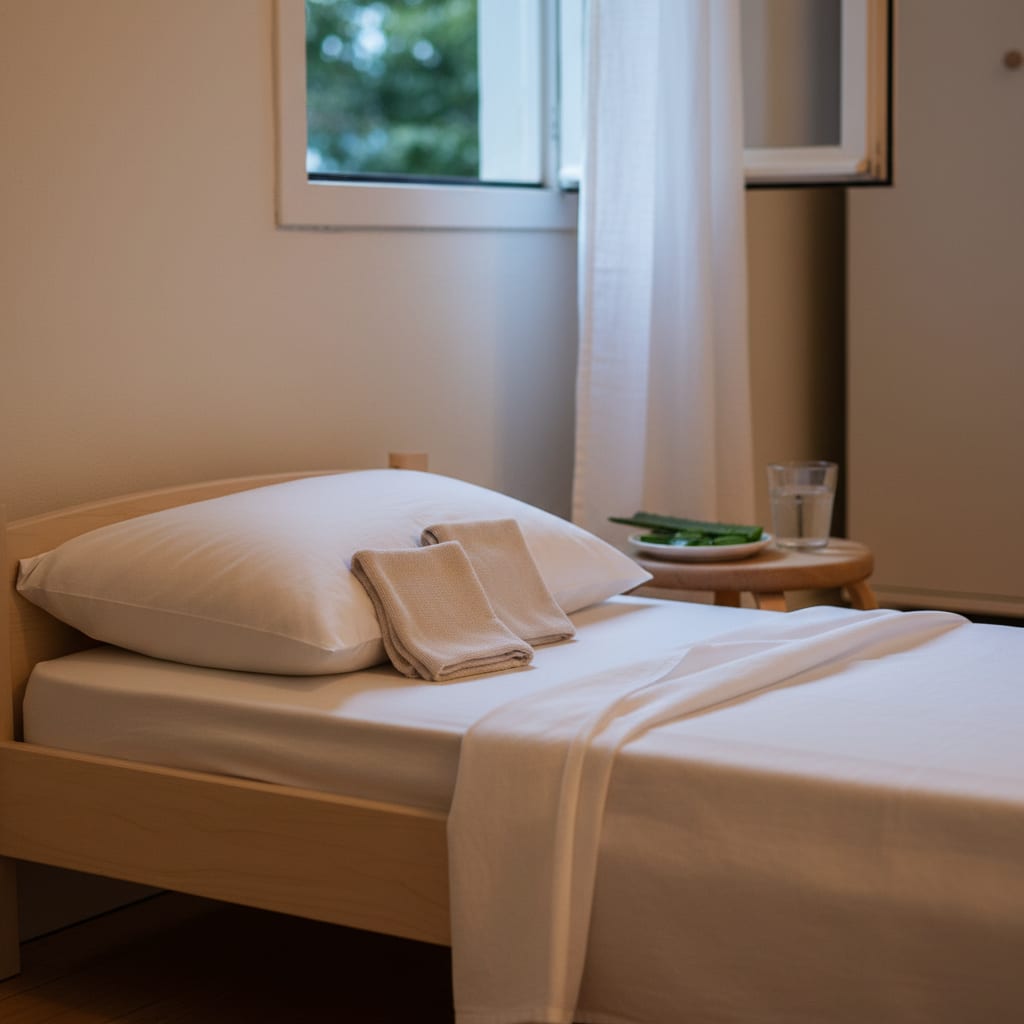
Short answer: a sunburned child sleeps better once the skin is cooled, nothing tight or rough is touching the burn, and the room is cool. Give a cool (not cold) bath before bed, pat dry, then smooth on a fragrance-free moisturizer or aloe while the skin is still damp. Offer water. Dress them in a soft, snug-fit cotton set with short sleeves and shorts so burnt shoulders and legs stay bare, and swap the duvet for a light cotton sheet. Call the doctor right away if a baby under 1 is burned, or if an older child has blisters, a fever or pain.
Why a sunburn wrecks the night
The NHS says sunburnt skin feels hot to the touch and sore. Both get worse in bed: the duvet traps the heat, the waistband sits on the burnt strip above the swimsuit line, and every roll onto a burnt shoulder wakes them. So it’s a heat-and-friction problem. Cool the skin first, then choose what touches it.
Before bed: cool the skin
Do this about half an hour before lights-out, so the skin has calmed down before your child lies on it.
- A cool bath or shower. HealthyChildren, the American Academy of Pediatrics’ parenting site, says to use cool water to help your child’s skin feel better. The NHS adds a sensible caution for little ones: cool the skin, but take care not to let a baby or young child get too cold. Lukewarm-cool is the target, not icy.
- Pat, don’t rub. The American Academy of Dermatology says to gently pat the skin dry after the bath.
- Moisturize while the skin is still damp. The AAD suggests a moisturizer containing aloe vera or soy. The NHS suggests aftersun or an unperfumed moisturizer. A plain, unscented gel like Seven Minerals pure aloe vera gel covers both. Test a small patch first on a child with sensitive skin.
- A drink of water. The AAD explains that sunburn draws fluid to the skin’s surface and away from the rest of the body. HealthyChildren suggests water or milk to replace lost fluids.
For extra relief, the AAD also mentions a colloidal oatmeal bath. A fragrance-free colloidal oatmeal packet such as Aveeno Soothing Bath Treatment dissolves into the same cool bath.
What to skip. The NHS says not to put ice or ice packs on sunburnt skin, not to use petroleum jelly on it, and not to pop blisters. HealthyChildren says to use medicated lotions only if your child’s doctor says it’s OK.
Pain relief. HealthyChildren says pain medicine can relieve a painful sunburn and names acetaminophen for babies 6 months or younger, and acetaminophen or ibuprofen for older children. Follow the label for your child’s age and weight, or ask a pharmacist. Never give aspirin: the NHS says not to give it to children aged 15 or under. Adult sunburn advice often lists aspirin, so check before you reach for the family bottle.
What to put them to bed in
This is where a style lens actually helps, because the obvious answer is the wrong one.
The instinct: a big, loose T-shirt. It feels kinder on burnt skin. But kids’ sleepwear in the US is built around fire safety: pajamas are either tested as flame-resistant or cut snug. Snug-fit cotton sets carry a hangtag with the Consumer Product Safety Commission’s required wording: “For child’s safety, garment should fit snugly. This garment is not flame resistant. Loose-fitting garment is more likely to catch fire.” An oversized daytime tee is neither snug nor flame-resistant. The full fabric case is in our guide to a child sweating at night.
The fix: less fabric, not looser fabric. Snug isn’t tight. A correctly sized rib-knit cotton set moves with the skin and doesn’t press into it. The NHS warning is about tight clothing over sunburn, the kind of waistband or seam that digs in. So:
- Choose coverage by where the burn is. Burnt shoulders and thighs (the classic beach-day pattern) are best left bare under a short-sleeve-and-shorts set. A soft organic cotton set like the Burt’s Bees Baby short-sleeve and shorts pajamas is the shape you want. Check the snug-fit hangtag when it arrives.
- Check the seams on the burn line. The swimsuit edge often burns hardest, and that’s usually where a pajama shoulder seam or waistband lands. Turn the set inside out and feel for a raised seam or a tight elastic. A flat seam or a soft, wide waistband is the one to pick tonight.
- Cotton, or rayon made from bamboo, over fleece. Fleece traps heat, which is the last thing a hot, burnt body needs.
If your child is still small enough for a sleep sack, the same logic applies: the lightest one you own, over a short-sleeve layer. The resort pool-day guide covers packing a dry, snug cotton set for exactly these evenings.
The bed and the room
Duvet off, sheet on. Swap the comforter for a single light cotton or linen sheet your child can kick off. A smooth percale pillowcase is kinder to a burnt cheek than flannel or a textured knit.
Cool the room. For a baby or toddler, Betteroo’s guide puts the comfortable sleep range at around 68 to 72°F, and suggests a fan that moves the air while pointing away from the crib rather than straight at it. Older kids are usually fine with the same cool room.
Keep water by the bed. A child who wakes hot and thirsty settles faster if the cup is already there.
If they wake up anyway
Expect a broken night. Go in, offer water, help them into a position that keeps the burn off the mattress, and don’t worry about bending the usual bedtime rules for a night or two. Betteroo’s guide to helping a little one sleep while they’re unwell makes the same point: extra comfort while a child feels rotten won’t undo good habits, so keep the familiar anchors (dim room, same routine) and ease back to normal once they’re better.
The next day, keep them out of the sun. HealthyChildren says to keep a child out of the sun until the sunburn is fully healed, and the NHS says to cover sunburnt skin from direct sunlight until it heals.

When sunburn needs a doctor
Most sunburn heals on its own. The NHS sunburn page says it usually gets better within 7 days. But some burns need a call, and these are the lines the sources draw.
Call your child’s doctor right away if:
- your baby is younger than 1 year old and gets sunburn (HealthyChildren);
- an older child has blistering, pain or fever (HealthyChildren).
The NHS adds urgent signs to get a same-day appointment or call 111 (in the US, your pediatrician’s after-hours line). These are blistered or swollen skin, a very high temperature, feeling hot, cold or shivery, being very tired, dizzy or sick, a headache, or muscle cramps. Severe sunburn can lead to heat exhaustion and heatstroke.
Treat it as an emergency if a child shows signs the NHS lists for heatstroke. These include hot skin that isn’t sweating, fast breathing and a fast heartbeat, confusion, a seizure, or still being unwell after 30 minutes of resting somewhere cool with fluids. Call 911 in the US.
FAQ
How can I help my sunburned child sleep?
Cool bath, pat dry, unscented aloe or moisturizer on damp skin, a drink of water, a short-sleeve snug-fit cotton set that leaves the burn bare, a light sheet instead of a duvet, and a cool room.
Should my child sleep in loose clothes with a sunburn?
Not in an oversized T-shirt. Children’s pajamas are designed to be snug-fitting or flame-resistant, and loose daywear is neither. Choose less coverage instead: short sleeves and shorts in soft cotton, with no tight seam or waistband sitting on the burn.
Is aloe vera safe for a child’s sunburn?
The AAD suggests a moisturizer containing aloe vera or soy, and the NHS an aftersun or unperfumed moisturizer. Pick a fragrance-free one and patch-test it first. Use medicated lotions only with your doctor’s OK.
When should I worry about my child’s sunburn?
Call the doctor right away for any sunburn on a baby under 1, or blisters, pain or fever in an older child. Get urgent help for dizziness, vomiting, headache, cramps or a very high temperature.
Keep Reading
The New-Mom Gift Guide: What She Actually Wants in 2026
Gifts new moms actually use — no novelty mugs. The Betteroo sleep app that saved us, the robe that isn't hideous, and more picks grouped by budget.
Gifts for Women Who Have Everything (Really)
Gift ideas for the woman who buys herself whatever she wants — upgrades, consumables and time-back gifts that land when she genuinely owns everything else.
Swaddle to Sleep Sack: The Arms-Out Transition Week
How to move a baby from swaddle to sleep sack without losing nights — what separates the sack styles, the week-long plan, and what to layer underneath.