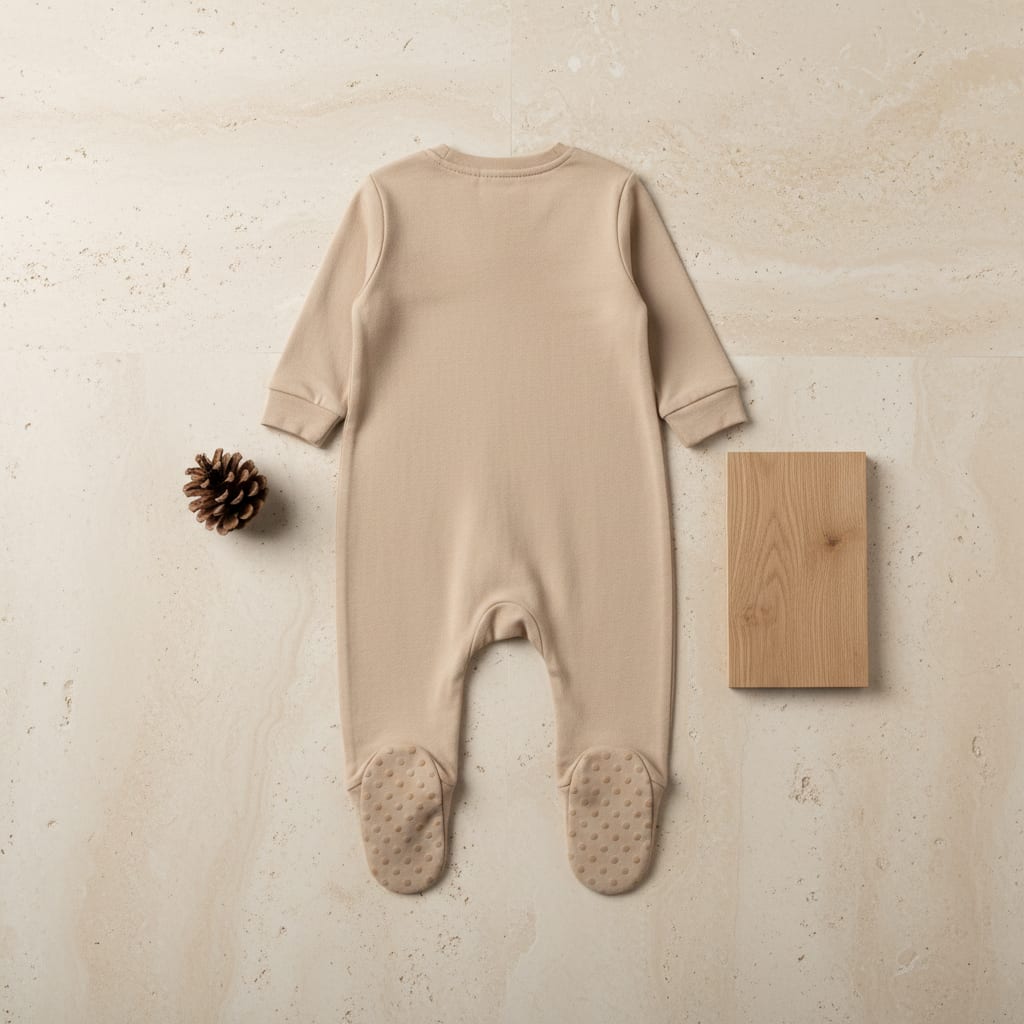
Short answer: for a toddler who climbs out of bed and pads across bare floors at night, buy footed pajamas with non-skid soles, in snug-fit cotton or in fleece labelled flame resistant, and in the size that fits now. The grips stop the slide on wood and tile, and the feet keep toes warm without socks that work loose by midnight. Getting the size right matters as much as the grips: a foot that’s too long folds under the heel and trips your child. For a toddler who runs hot, footless pajamas plus a pair of grip socks do the same job.
Why grippy soles matter on a night walk
Bare floors are slippery in socks, and a sleepy toddler walking in the dark isn’t watching where their feet go. The American Academy of Pediatrics’ page on shoes for active toddlers recommends “nonskid soles, such as sneakers, that will help keep your toddler steady on slippery floors.” Nobody wants sneakers on at 2 a.m., but the same idea applies to the feet of a sleeper.
The same page notes that babies’ feet “develop best if they’re not confined in shoes” and that socks are enough for warmth early on. KidsHealth’s page on baby shoes says barefoot is still best for foot development, and that “a pair of socks or booties with non-skid soles is also fine for chilly toes.” A soft, flexible footed sleeper with grips is that sock, sewn on.
The rule that comes first: snug fit or flame resistant
This is the part most parents never hear about, and it decides which pajamas you can size up.
Under the federal children’s sleepwear standard (16 CFR part 1615, which covers sizes up to 6X), children’s sleepwear has to pass a flammability test, unless it’s a “tight-fitting garment” cut to a set of maximum measurements, or an infant garment sized nine months or smaller. Bigger sizes, 7 to 14, sit under a sister standard, part 1616.
In practice that gives you two kinds of toddler pajamas:
- Snug-fit cotton. Not treated to resist flame, so it must fit close to the body. The regulation requires a yellow hangtag reading “For child’s safety, garment should fit snugly. This garment is not flame resistant. Loose-fitting garment is more likely to catch fire.” and a label reading “Wear Snug-fitting, Not Flame Resistant.”
- Flame-resistant fabric, usually polyester fleece, which passes the test and can be cut looser.
Fit Notes: never buy snug-fit cotton a size up “to grow into.” Loose is exactly what the label tells you not to do. If you want room to grow, buy a flame-resistant fleece pair instead.
Getting the feet right
The size that matters on a footed pajama is the foot.
- Toes should reach the end without curling. If they’re pressed against the seam, size up.
- The heel should sit at the heel. If the foot is long enough to fold under, the grips end up beneath the ankle, and the spare fabric is a trip hazard on the stairs.
- Check about once a month. The AAP suggests checking a toddler’s shoe fit “about once a month,” and says “it’s better to have no shoes at all than shoes that are too tight.” Footed pajamas outgrow the same way, from the toes first.
Fold-over cuffs and convertible feet help when a child is between sizes, but they don’t make a long cotton sleeper safe to buy loose.
The footed pajamas to buy
Snug-fit cotton with grips: Burt’s Bees Baby snug fit footed pajamas. Organic cotton, a 2-way zip front, and what the listing calls “Non-Slip Bee Grips” on the feet. This is the one I’d put in the night drawer for a walker. The two-way zip earns its place too, for the reasons in my zips vs snaps guide.
Snug-fit cotton, in a value pack: Simple Joys by Carter’s snug-fit footed cotton pajamas. A three-pack, so there’s always a clean pair. Check the soles in the photos for the color you choose before relying on grip.
Flame-resistant fleece: Simple Joys by Carter’s flame resistant fleece footed pajamas. The pick for a cold house, and the route if you need some room to grow, since fleece that’s flame resistant doesn’t have to fit snugly.
For a toddler who runs hot: footless pajamas and Bearbay non-slip cotton socks with grippers on the soles. Socks come off easily, so keep a pair by the bed rather than putting them on at bedtime. If sweating is the reason your child kicks off covers, the fabric choices in pajamas for a child who sweats at night help.
A footed sleeper also turns up in family Christmas sets: my matching family Christmas pajamas roundup includes one for the 12-to-24-month size. For a toddler who walks at night, check that the feet on a matching set have grips too, and that its tag says snug fit or flame resistant.
 Little feet in the hallway again?
Betteroo builds an age-specific sleep plan around your child's real nights, and adjusts it as they change.
Take the quick sleep quiz →
Make the night walk safer
The pajamas are half of it. The other half is the route.
- Light the path dimly. A low plug-in light in the hall, so your child can see the floor without the room going bright.
- Clear the floor. Toys and loose clothes left in the walkway are what trip a sleepy toddler, grips or not.
- Watch the stairs. A gate at the top matters more at night than in the day.
- Keep the room comfortable. About 68 to 72°F (20 to 22°C) suits most children, so you’re not piling on layers that make them hot and restless.
If the walks are nightly, the clothes won’t fix the reason for them. Betteroo has a calm way to handle the return trips that’s worth reading alongside this.
A note for babies under 12 months
Grips are for walkers. For a baby in a crib, a footed sleeper and a sleep sack are the whole outfit: back to sleep, on a flat, firm surface, with nothing loose in the crib and no weighted sleepwear. The grips do no harm, but they aren’t the point until your child is on their feet.
FAQ
Are footed pajamas with grips safe for toddlers?
Yes, as long as they fit. Choose snug-fit cotton or a fabric labelled flame resistant, and make sure the feet aren’t so long that they fold under. The grips help on bare floors.
Should toddler pajamas be snug or loose?
Cotton pajamas that aren’t flame resistant must fit snugly, and US rules require them to say so on the tag. Loose pajamas should be made of flame-resistant fabric, usually polyester fleece.
Can I size up footed pajamas so they last longer?
Not in snug-fit cotton. Size up only in flame-resistant fleece, and even then keep the feet short enough that your child doesn’t trip.
Are grip socks better than footed pajamas?
They do the same job on the floor. Footed pajamas stay on all night; socks are easier for a toddler who runs hot, but they come off, so keep a pair by the bed.
Do babies need non-skid soles?
Not before they walk. Pediatric guidance says barefoot is best for foot development, with socks or booties with non-skid soles fine for warmth.