The Most Comfortable Ballet Flats You Can Actually Walk In
The most comfortable ballet flats for real walking: what makes a flat walkable, picks by use-case, honest fit notes, and the no-show sock question, answered.
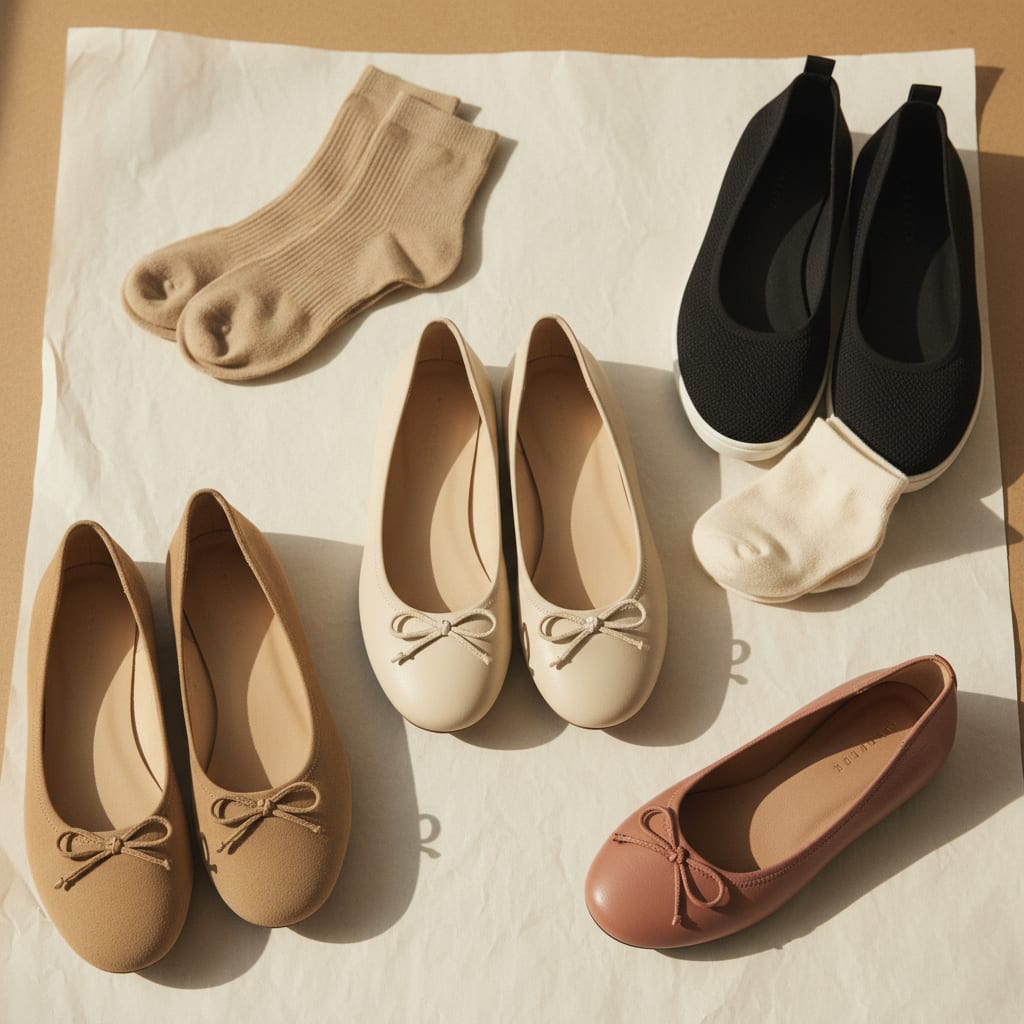
Ballet flats are back, and my feet have opinions, because I remember the last era: shredded heels, paper-thin soles, and pretending a shoe with the structure of a tortilla was “so comfortable.”
The walkable ones exist now, and the difference is measurable: a cushioned insole, a rounder toe box, and an elasticized or padded topline. Get those three things and a flat can genuinely do a full errand day. Skip them and you’ve bought a slipper with ambitions. Here’s what to look for and which flat fits which life.
What makes a ballet flat walkable
- Padding where your foot actually lands. A cushioned insole with some heel and ball padding — the classic flat has a millimeter of leather between you and the sidewalk, which is why the classic flat hurts.
- Toe shape. Round and almond toe boxes let toes lie flat; sharply pointed flats borrow length from your toes and repay you in blisters. If you love a point, buy it half a size long.
- Topline that grips without sawing. The edge around the opening is where flats destroy heels. Elasticized or padded toplines flex when you walk; raw stiff edges carve. Run a thumb around it in the store — if it feels sharp to your thumb, your heel loses.
- A sole with something to say. A little flexibility, a little tread. Full-glass-smooth leather soles are for people who take cars.
Best everyday errand flat
A round-toe leather flat with a cushioned footbed and rubber-injected sole. This is the fall-through-spring version of my sandal rotation — the shoe that fills the flats slot in my capsule wardrobe and pairs with literally every bottom on that list.
Fit Notes: leather flats should be snug-not-tight on day one; they stretch a half size across the width in the first two weeks but never in length. Buy the length that fits and let the width come to you.
Best flat for actual mileage
The sneaker-flat hybrid: ballet shape on top, athletic-style cushioning and a flexible rubber sole underneath. Less delicate to look at, dramatically more shoe to walk in. If your days are more playground-loop than lunch date, this is the one — it’s the flat equivalent of the sneaker-boot hybrid in my winter boots roundup.
Fit Notes: these run true to sneaker sizing. The stretchy knit versions accommodate wide feet beautifully but relax over time — snug at purchase is correct.
Best dressed-up flat
A pointed or almond-toe flat in suede or soft leather with a slight (half-inch) hidden heel lift. Handles school concerts, dinners, and any family-photo day that involves standing on grass in something a heel would sink through.
Fit Notes: pointed styles run short — go up half a size, full stop. The almond toe is the compromise shape: 90% of the elegance, 40% of the toe complaints.
Best budget flat
The foldable-soft ballet flat in the good neutrals. Not a mileage shoe — the padding is modest and the sole is thin — but as the keep-in-the-bag backup and the drive-to-dinner shoe, it’s unbeatable per dollar.
Fit Notes: soft unstructured flats run generous because there’s nothing holding them to shape; if between sizes, go down, or your heel will exit the shoe on stairs.
The sock question, answered
Yes, you can — here’s the decode. No-show liner socks are the default: buy the kind with a silicone heel grip or they will migrate into your arch by the second block, which is its own circle of hell. Visible socks are now a styling choice: a sheer sock or a fine ribbed crew sock with flats and cropped pants reads deliberately fashion-y, especially with the sneaker-flat hybrids. And in shoulder season, thin merino no-shows extend flats a full extra month in each direction.
The only real rule: never raw-foot a brand-new leather flat on a long day. Break them in with liners; earn the barefoot look.
The honest caveat
Flats are the finishing shoe, not the standing shoe. Even the best cushioned flat has less support than a decent sneaker, and no flat survives an all-day theme park (that’s sneaker or sport sandal territory). Buy flats for the 8,000-step day, not the 18,000-step day, and both your feet and your flats last years.
FAQ
What are the most comfortable ballet flats for walking?
Flats with a cushioned insole, a round or almond toe box, an elasticized topline, and a flexible rubber-detailed sole. The sneaker-flat hybrids are the most walkable of all; classic thin-soled pointed flats are the least, regardless of price.
Do ballet flats run big or small?
Round-toe leather flats run roughly true and stretch in width; pointed-toe flats run short (size up a half); soft unstructured flats run generous (size down if between). Length never stretches — buy the length that fits on day one.
How do I stop ballet flats from giving me blisters?
Three moves: break them in over short wears with no-show liner socks, choose flats with padded or elasticized toplines (the raw stiff edge is the blister-maker), and keep a stick of anti-friction balm in your bag for the first two weeks. Persistent heel bite after that means the shoe is the wrong shape for your heel — return it.
Are you supposed to wear socks with ballet flats?
Either works now. No-show liners with silicone heel grips are the invisible default; sheer or fine ribbed socks shown deliberately are a current styling move, especially with cropped hems. The only mistake is the bare foot in a brand-new stiff flat on a long day.
Keep Reading
The New-Mom Gift Guide: What She Actually Wants in 2026
Gifts new moms actually use — no novelty mugs. The Betteroo sleep app that saved us, the robe that isn't hideous, and more picks grouped by budget.
Gifts for Your Best Friend She'll Actually Use
Gifts for your best friend, sorted by what your friendship runs on: long-distance, the new-mom friend, the host, the style twin and the friend since school.
Best Work Tote Bags for Moms (Laptop + Lunchbox)
Five work totes that hold a laptop and a lunchbox without looking like a diaper bag, plus the measurements that matter and four things to check before buying.